
Contents
After experiencing water damage, it’s vital to act quickly to prevent mold growth. You need to remove standing water immediately and dry the affected area thoroughly. Increasing air circulation and using dehumidifiers effectively can make a significant difference. However, there are additional steps you must take to ensure hidden moisture doesn’t linger. Understanding these techniques can help you safeguard your space and maintain a mold-free environment. Let’s explore these strategies in detail.
Key Takeaways
- Act quickly to remove standing water using wet vacuums and mops to minimize moisture levels.
- Dry out the affected area thoroughly with fans and dehumidifiers to maintain humidity below 60%.
- Inspect hidden spaces for moisture and use a moisture meter to identify damp areas.
- Clean and disinfect surfaces regularly, especially in moisture-prone areas, to prevent mold growth.
- Apply mold inhibitors as directed and conduct regular inspections for early signs of mold.
Act Quickly to Remove Water
When water infiltrates your home, acting quickly to remove it is essential to prevent mold growth.
Start by identifying the source of the water and stopping it if possible. Next, gather necessary tools like wet vacuums, mops, and towels to aid in the removal process. Make sure you’re wearing protective gear, such as gloves and masks, to safeguard your health against potential contaminants.
Once you’ve removed standing water, assess the surrounding areas for moisture retention. Check carpets, walls, and furniture for dampness, as these surfaces can harbor mold if not addressed promptly.
Don’t forget to ventilate the area by opening windows and using fans to improve air circulation.
Dry Out the Affected Area
To effectively dry out the affected area, start by removing any standing water immediately.
Next, increase air circulation by opening windows and using fans to promote evaporation.
Finally, utilize dehumidifiers to maintain ideal humidity levels and prevent mold growth.
Remove Standing Water
Act swiftly to remove standing water, as it’s essential in preventing mold growth.
Begin by using a wet/dry vacuum to extract excess water from carpets, floors, and surfaces. If the area is extensive, consider renting industrial-grade pumps or fans to expedite the process.
Make sure to check hidden spaces, like under cabinets and behind walls, where water may accumulate unnoticed.
After you’ve removed the bulk of the water, use absorbent materials, such as towels or mops, to soak up any remaining moisture.
Dispose of any damaged materials promptly, as they can harbor mold spores.
Increase Air Circulation
Increasing air circulation is essential for drying out affected areas and preventing mold growth.
To enhance airflow, open windows and doors to create cross-ventilation. Use fans strategically; place them in windows or doorways to push moist air outside while drawing in drier air.
If possible, elevate furniture and belongings to allow airflow beneath them. Keep closet doors ajar to promote ventilation in enclosed spaces.
Regularly check and adjust fan positions to maximize efficiency.
Use Dehumidifiers Effectively
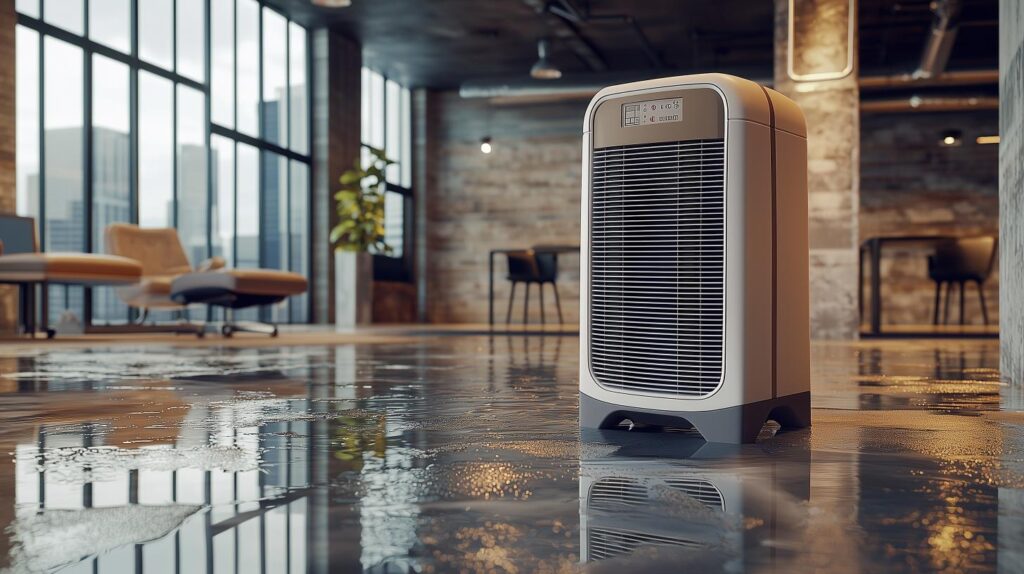
While enhancing air circulation is a great starting point, employing dehumidifiers can greatly accelerate the drying process in areas prone to moisture.
Position your dehumidifier in the most affected spots, ensuring it’s close to the source of water damage. Set it to the appropriate humidity level—ideally below 60%—to effectively draw moisture from the air.
Regularly monitor the water collection tank, emptying it as needed to maintain peak performance. If the area is especially large or damp, consider using multiple units.
Allow the dehumidifiers to run continuously for several days to maximize effectiveness. By taking these proactive steps, you’ll create an environment less conducive to mold growth, ensuring your space remains safe and comfortable for everyone.
Increase Air Circulation
To effectively prevent mold growth, you need to increase air circulation in your space.
Open windows and doors to allow fresh air in, and use fans and dehumidifiers to maintain ideal humidity levels.
This proactive approach helps eliminate stagnant air, reducing the likelihood of mold development.
Open Windows and Doors
Opening windows and doors can greatly enhance air circulation in your home, reducing the likelihood of mold growth. When you allow fresh air to flow through your space, you effectively lower humidity levels, which is essential after water damage.
Mold thrives in damp environments, so increasing ventilation is key. Make it a habit to open windows and doors whenever possible, especially during dry and breezy days. This simple action helps to expel stale, moist air and invites drier air in.
Be mindful to check weather conditions to maximize effectiveness. By promoting airflow, you create a healthier environment, making your home a more pleasant place to live.
Taking these proactive steps fosters community awareness and shared responsibility in mold prevention.
Use Fans and Dehumidifiers
Increasing air circulation is essential for mold prevention, and using fans and dehumidifiers is an effective way to achieve this.
By strategically placing fans in affected areas, you can enhance airflow, helping to evaporate moisture quickly. Aim to direct airflow towards damp surfaces to speed up drying.
Meanwhile, dehumidifiers work by extracting excess moisture from the air, creating an environment less conducive to mold growth. Set your dehumidifier to maintain indoor humidity levels below 60%. Regularly empty the water reservoir and clean the filters to ensure peak performance.
Combining these methods accelerates drying and fosters a healthier living space, allowing you and your loved ones to feel safe and comfortable in your home.
Use Dehumidifiers Effectively
While many homeowners overlook humidity control, using dehumidifiers effectively can considerably reduce the risk of mold growth in your living spaces.
Start by placing your dehumidifier in areas prone to moisture, like basements and bathrooms. Make sure you choose a unit with the right capacity for your space; a small unit may not effectively manage high humidity levels.
Set your dehumidifier to maintain humidity levels between 30% and 60%. Regularly empty the water reservoir, or connect it to a drain for continuous operation.
Monitor the environment; if you notice condensation on windows or walls, it’s time to adjust settings or increase usage.
Clean your dehumidifier’s filter frequently to ensure peak performance. Keep doors and windows closed while the unit runs to maximize efficiency.
Inspect for Hidden Moisture
To effectively prevent mold, you need to inspect for hidden moisture in your home.
Use moisture meters to identify damp areas, and don’t forget to check behind walls and in other concealed spaces.
Proactively addressing these potential trouble spots can greatly reduce your risk of mold growth.
Use Moisture Meters
Many homeowners overlook hidden moisture, which can lead to mold growth and structural damage.
To effectively combat this issue, consider using moisture meters. These devices measure the moisture content in various materials, helping you identify damp areas that aren’t visible to the naked eye.
Place the meter against walls, floors, and ceilings to pinpoint moisture levels. If readings exceed 20%, it’s a strong indicator that you need to take action.
Regularly using moisture meters allows you to stay ahead of potential mold problems. By being proactive and addressing hidden moisture, you can protect your home and create a healthier living environment for you and your family.
Don’t wait—invest in a moisture meter today!
Check Behind Walls
Using moisture meters is just the first step in identifying potential mold threats.
Next, you should check behind walls, as hidden moisture often lurks in these concealed areas. Remove any wall coverings carefully to inspect for signs of water damage, such as discoloration or dampness.
You’re looking for areas that feel unusually cool or have a musty odor, which can indicate the presence of moisture. If you find any hidden leaks or moisture pockets, act quickly to address them.
Dry out the area thoroughly, and consider using a dehumidifier to maintain ideal humidity levels.
Inspect Hidden Spaces
Inspecting hidden spaces is crucial for identifying moisture that could lead to mold growth. Areas like attics, basements, and behind appliances often retain water without your knowledge. Use the following checklist to guide your inspections:
| Area to Inspect | Signs of Moisture | Action to Take |
|---|---|---|
| Attic | Stains on wood | Check insulation, replace if damp |
| Basement | Musty smell | Use dehumidifier, dry out |
| Behind Appliances | Condensation build-up | Move appliances, dry area |
| Under Sinks | Water pooling | Fix leaks, dry thoroughly |
| Around Windows | Dampness or peeling paint | Reseal, verify proper drainage |
Clean and Disinfect Surfaces
While it may seem tedious, regularly cleaning and disinfecting surfaces is essential in preventing mold growth in your home. Start by using a mixture of water and a suitable disinfectant, ensuring it’s safe for the surface material. Pay close attention to areas prone to moisture, like countertops, bathrooms, and under sinks.
Use a clean cloth or sponge to apply the solution, and don’t forget to scrub any visible dirt or grime. Rinse the surfaces with water afterward, as leftover disinfectant can attract dirt. For porous materials, consider using a steam cleaner or specialized mold-removing products.
Establish a routine for cleaning these surfaces weekly, especially after any spills or leaks. This proactive approach keeps your home hygienic and fosters a sense of community and responsibility among your household members.
Remove Damaged Materials
Identify and remove any damaged materials in your home promptly to prevent mold from taking root. Mold thrives in damp environments, and damaged materials can serve as a perfect breeding ground.
Here’s what you should do:
Assess the Damage: Check walls, floors, and ceilings for any signs of water damage or mold growth.
Remove Wet Items: Get rid of soaked carpets, rugs, and upholstery that can’t be dried immediately.
Dispose of Compromised Materials: Remove drywall, insulation, or wood that shows signs of rot or mold, as these can harbor spores.
Seal and Bag: Seal damaged materials in plastic bags before disposing of them to contain any potential mold spores.
Taking these steps helps in preventing mold and creates a healthier living environment.
Monitor Humidity Levels
Maintaining ideal humidity levels is essential for preventing mold growth in your home. Ideally, you want to keep indoor humidity between 30% and 60%.
To achieve this, invest in a hygrometer to accurately measure moisture levels. Regularly check these readings, especially after water damage or during humid seasons.
If humidity exceeds the recommended range, consider using dehumidifiers in affected areas.
Ensure proper ventilation by opening windows or using exhaust fans in kitchens and bathrooms.
You should also inspect your home for any leaks or areas prone to moisture accumulation, like basements and crawl spaces.
Address these issues promptly to keep humidity in check.
Apply Mold Inhibitors
To effectively combat mold growth, applying mold inhibitors can be a proactive strategy for homeowners.
These products can greatly reduce the risk of mold proliferation by creating an environment that’s less favorable for spores to thrive.
Here’s how you can make the most of mold inhibitors:
Choose the Right Product: Select an inhibitor that’s suitable for your specific needs, whether it’s for indoor use or exterior surfaces.
Follow Application Guidelines: Always adhere to the manufacturer’s instructions on how to apply the product for maximum effectiveness.
Reapply as Needed: Check the longevity of the inhibitor and reapply it according to the recommendations to maintain protection.
Combine with Other Prevention Methods: Use inhibitors alongside dehumidifiers and proper ventilation for a thorough mold prevention strategy.
Regularly Check for Signs of Mold
How often do you take a moment to inspect your home for signs of mold? Regular inspections are crucial in preventing mold growth, especially after water damage.
Start by checking high-risk areas like bathrooms, basements, and around windows. Look for discoloration, musty odors, or damp spots on walls, ceilings, and floors. These can indicate hidden moisture, a breeding ground for mold.
Don’t ignore your HVAC system; it can circulate mold spores throughout your home. Replace air filters regularly and consider scheduling professional cleanings.
If you find mold, act quickly. Use proper cleaning solutions and safety gear, or consult a professional if the infestation is severe.
Review
By acting swiftly and taking these proactive steps, you can create a fortress against mold after water damage. Think of your home as a ship; keep it dry and ventilated to weather the storm. Regular inspections and the use of mold inhibitors are your trusty compass, guiding you toward a mold-free environment. Remember, the battle against moisture is ongoing, but with vigilance and care, you can sail smoothly into safe, clean living spaces.
Recent Posts
Guide to Structural Drying After Water Damage
When faced with water damage, it’s essential to act swiftly and methodically. You’ll need to
Effective Structural Drying Techniques After Water Damage
When water damage strikes, can you afford to wait? Effective structural drying is vital to
Top 10 Structural Drying Methods After Water Damage
In the aftermath of water damage, the environment can feel like a sponge, saturated and