
Contents
When your basement floods after a heavy rain, the first step you take is essential for a safe recovery. Following proper guidelines for post-water damage cleanup ensures you minimize health risks and speed up the restoration process. From evaluating the damage to monitoring for mold growth, each step plays a significant role. Understanding the best practices can make all the difference in effectively handling the situation and preventing further issues. What should you prioritize first?
Key Takeaways
- Wear protective gear, including gloves and masks, to shield against contaminants during cleanup.
- Identify and eliminate the source of water intrusion to prevent further flooding and damage.
- Use a wet/dry vacuum or sump pump for effective water extraction from affected areas.
- Ensure proper ventilation and use fans or dehumidifiers to aid in the drying process.
- Monitor for mold growth and seek professional help if significant infestations or persistent moisture occur.
Assess the Extent of Water Damage
When you face water damage, it’s crucial to quickly evaluate the extent of the problem to determine the necessary cleanup steps.
Start by identifying the source of the water intrusion; it could be a broken pipe, heavy rain, or a faulty appliance. Next, examine the affected areas, including walls, floors, and ceilings, checking for visible signs of water damage like discoloration, warping, or mold.
Don’t forget to inspect hidden spaces, such as behind furniture or within cabinets, as water can accumulate in unexpected places.
Classify the damage into categories: Class 1 involves minimal absorption, while Class 4 indicates significant saturation. Document your findings with photos for insurance purposes.
Finally, if you’re unsure about the severity or potential health risks, consider consulting a professional. By methodically evaluating the damage, you’ll ensure a more effective and safer cleanup process, fostering a sense of community support and resilience.
Ensure Personal Safety Precautions
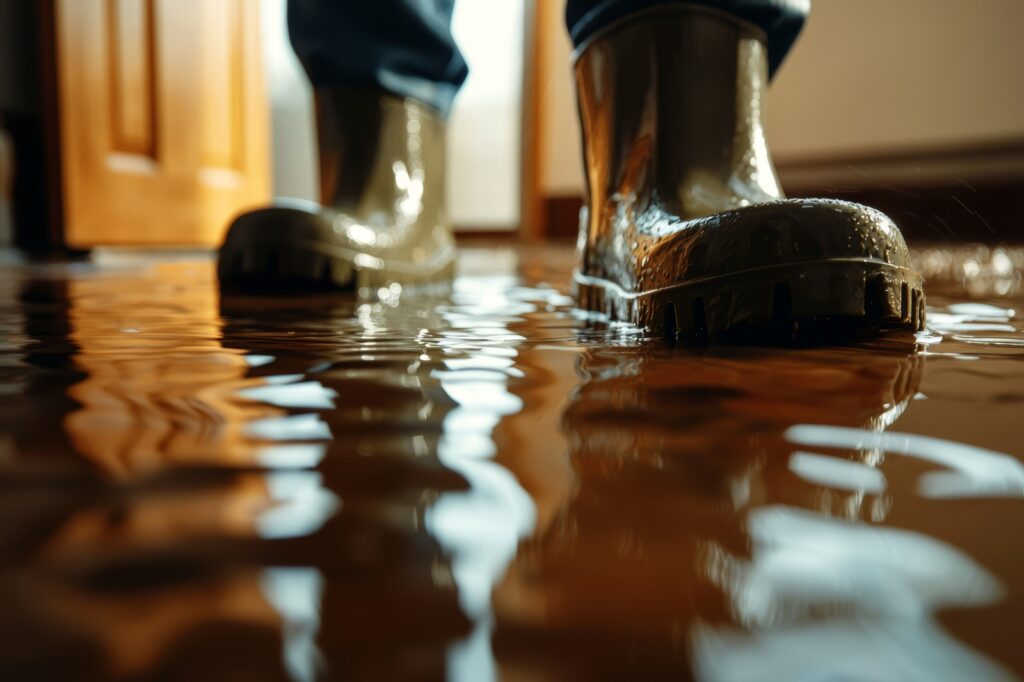
Before diving into cleanup efforts, it’s essential to prioritize your safety to prevent injuries or health issues. Start by wearing appropriate protective gear, including gloves, masks, and boots. This will shield you from contaminants and hazardous materials that may be present in the water.
Make certain to keep electrical devices unplugged and avoid standing water to reduce the risk of electrocution. If you’re working in a damp environment, ensure proper ventilation to avoid mold growth and respiratory issues.
Always keep a first-aid kit nearby for minor injuries. Inform someone about your cleanup plans, so they know where you’re and can check on you if needed.
Finally, stay aware of your surroundings; watch for falling debris or unstable surfaces. By taking these precautions, you’ll create a safer environment for yourself and those around you, making the cleanup process more efficient and effective.
Remove Standing Water Promptly
Act quickly to remove standing water, as it can lead to extensive damage and mold growth within hours.
Start by identifying the source of the water and addressing it to prevent further flooding. Use a wet/dry vacuum or a sump pump to extract the water efficiently. If the area is large, consider enlisting help from friends or family to speed up the process.
Once you’ve removed the bulk of the water, mop up any remaining moisture using towels or a mop. Make sure to wear protective gear, including boots and gloves, to keep yourself safe from contaminants.
After removal, verify the area is well-ventilated to aid in the drying process.
You’ll protect your home and foster a sense of community as you tackle this challenge together. Taking swift action ensures a cleaner, safer environment for you and those around you.
Dry Out the Affected Areas
To effectively dry out the affected areas, you should begin by using fans and dehumidifiers to promote airflow and reduce humidity. Place fans strategically to direct air across wet surfaces, and set up dehumidifiers in enclosed spaces to absorb moisture. Be certain to keep windows and doors closed to maximize the efficiency of the dehumidifiers.
Next, check for any hidden moisture in walls, carpets, and furniture. If necessary, remove soaked materials to ensure thorough drying. It’s vital to monitor the drying process regularly; aim for a moisture level below 50%.
Additionally, keep in mind the importance of safety. Wear protective gear, especially if you’ve been exposed to contaminated water.
Inspect for Mold Growth
Once you’ve dried out the affected areas, inspecting for mold growth should be your next priority. Mold can start to develop within 24 to 48 hours after water exposure, so prompt action is vital.
Begin by examining the surfaces in your home, including walls, ceilings, and floors, for any discoloration or fuzzy growth. Pay special attention to hidden areas like under carpets or behind furniture.
Use your sense of smell, too; a musty odor often indicates mold presence. If you find mold, it’s important to determine its extent. Small patches may be manageable with proper cleaning, but larger infestations require professional help.
Document your findings with photos, and maintain a detailed record of any areas treated. Remember, addressing mold protects your home and ensures a healthier living environment for you and your loved ones.
Stay vigilant, and you’ll keep your space safe and welcoming.
Use Protective Gear During Cleanup
When cleaning up after water damage, wearing protective gear is vital for your safety.
You’ll need essential equipment like gloves, masks, and goggles to shield yourself from potential hazards such as mold and contaminants.
Proper gear usage protects your health and ensures a more effective cleanup process.
Essential Protective Equipment
While tackling water damage cleanup, wearing the right protective gear is essential for your safety and well-being. Proper equipment helps shield you from hazards like bacteria, chemicals, and sharp debris.
Here are some must-have items to take into account:
- Heavy-duty gloves: Protect your hands from contaminants and sharp objects.
- Waterproof boots: Keep your feet dry and safe from potential hazards.
- N95 respirator: Filter out harmful particles and prevent inhalation of mold spores.
- Safety goggles: Shield your eyes from splashes and debris.
Investing in these essentials safeguards you and fosters a sense of community responsibility.
Proper Gear Usage
Using protective gear during cleanup is non-negotiable for your safety. When you’re dealing with water damage, harmful contaminants and debris can pose serious health risks. Ensuring you’re equipped with the right gear protects you from exposure. Here’s a quick guide to essential protective gear:
| Gear Type | Purpose |
|---|---|
| Gloves | Prevent skin contact with contaminants |
| Mask | Protects against inhaling mold spores |
| Goggles | Shields eyes from debris and chemicals |
| Waterproof boots | Keeps feet dry and safe from sharp objects |
| Coveralls | Provides full-body protection from contaminants |
Always wear appropriate gear to safeguard your health. You’re not alone in this; by following these guidelines, you’re part of a community that values safety and well-being.
Clean and Disinfect Surfaces
After addressing any standing water, it’s important to clean and disinfect surfaces to prevent mold growth and safeguard your health.
This step is vital, as contaminated surfaces can pose serious health risks.
Here’s how to effectively clean and disinfect:
Use appropriate cleaning solutions: Opt for EPA-registered disinfectants that target mold and bacteria.
Scrub surfaces thoroughly: Use brushes or cloths to remove dirt and debris, making sure you reach all crevices.
Rinse with clean water: After disinfecting, rinse surfaces to remove any residue from the cleaning agents.
Allow to dry completely: Ensure adequate ventilation to facilitate drying and help prevent mold regrowth.
Properly Dispose of Contaminated Materials
Once you’ve cleaned and disinfected the surfaces, it’s time to focus on the proper disposal of contaminated materials. This step is essential for preventing health risks and further damage. Always wear gloves and a mask while handling contaminated items.
Here’s a quick reference table to guide your disposal process:
| Item Type | How to Dispose | Notes |
|---|---|---|
| Carpeting | Bag and seal for disposal | Check local regulations |
| Drywall | Cut out and discard | Verify it’s dry to prevent mold |
| Furniture | Clean, then discard if needed | Consider salvage options |
Be certain to follow your local waste management guidelines. Proper disposal protects your space and contributes to a healthier community. By taking these steps, you’re helping yourself and those around you.
Monitor for Future Mold Growth
To prevent future mold growth, it’s vital to monitor the affected areas regularly, especially in the weeks following cleanup.
Mold can develop quickly in damp environments, so keeping an eye on potential problem spots is important.
Here are some key actions to take into account:
Check humidity levels: Make certain indoor humidity stays below 50%.
Inspect for leaks: Look for signs of water leaks in walls, ceilings, and pipes
Examine surfaces: Regularly check for discoloration or a musty odor that might indicate mold
Keep ventilation open: Maintain proper airflow in your home to reduce moisture buildup.
Seek Professional Help if Necessary
If you notice persistent issues or extensive damage following water cleanup, seeking professional help can be essential. Professionals possess the expertise and equipment to address problems you might not detect, such as hidden mold growth or structural damage. They can provide thorough assessments and effective remediation strategies.
Here’s a quick reference table to help you decide when to call for help:
| Situation | Action Needed |
|---|---|
| Persistent moisture or odor | Call a water damage expert |
| Visible mold growth | Contact a mold remediation service |
| Structural damage (e.g., sagging) | Seek a structural engineer |
Wrap-Up
Safeguarding your space after water damage is essential. Stay safe by wearing protective gear, swiftly separating standing water, and systematically drying out affected areas. Keep a keen eye on potential mold and meticulously clean surfaces to ensure a thorough recovery. If the situation seems serious, don’t hesitate to seek specialized support. By following these straightforward steps, you’ll promote a safe and successful restoration, protecting your property from further peril while preserving your peace of mind.
Recent Posts
What Are Best Practices for Commercial Mold Inspection?
When it comes to commercial mold inspection, understanding the implications of mold growth is vital
What Are Effective Mold Remediation Techniques?
When it comes to mold remediation, understanding the root causes and effective techniques is vital.
Top 3 Mold Remediation Techniques After Water Damage
After experiencing water damage, addressing mold growth promptly is vital. You’ll need to start by