
Contents
When dealing with mold removal post-flood, it’s vital to follow a structured approach. Start by evaluating the extent of water damage and identifying contamination sources. Don’t underestimate the importance of safety; using proper personal protective equipment is essential. After removing affected materials, thorough drying becomes paramount. Understanding these steps and their implications can greatly impact the effectiveness of your mold remediation efforts. So, what comes next in the fight against mold?
Key Takeaways
- Inspect and document all affected areas for water damage to assess the extent of mold risk.
- Remove any water-damaged materials like carpets, drywall, and insulation to prevent mold growth.
- Ensure proper ventilation and use dehumidifiers to maintain humidity levels below 60% during drying.
- Apply high-quality mold inhibitors to clean and dry surfaces after removing contaminated materials.
- Regularly monitor treated areas for mold recurrence and reapply inhibitors as necessary.
Assessing the Extent of Water Damage
When evaluating the extent of water damage after a flood, it’s crucial to act quickly and methodically.
Begin by inspecting the affected areas, focusing on walls, floors, and ceilings. Look for visible signs of water infiltration, such as discoloration, peeling paint, or warped surfaces. Use a moisture meter to measure the moisture levels in wood and drywall; readings above 20% indicate significant damage.
Consider the source of the water—clean water, gray water, or black water—as this affects the necessary remediation steps. Document your findings with photos for insurance purposes.
Next, identify any structural compromises, such as sagging floors or cracked foundations, which require immediate attention.
Prioritize areas with poor ventilation, as these are prime candidates for mold growth. By systematically evaluating the damage, you lay a strong foundation for effective mold removal and restoration.
Ensuring Proper Safety Measures
After evaluating the extent of water damage, it’s crucial to prioritize safety before starting mold removal.
Begin by wearing appropriate personal protective equipment (PPE) such as gloves, goggles, and N95 respirators. This gear helps shield you from mold spores and chemicals you may encounter.
Make sure your workspace is well-ventilated; opening windows or using fans can reduce airborne contaminants.
Next, check for electrical hazards. If standing water is present, shut off power to the affected area to prevent electrocution. If you’re uncertain about electrical systems, consult a professional.
Keep a first aid kit handy for minor injuries.
It’s also wise to inform others in your household about your mold removal efforts, especially those with respiratory issues.
Removing Affected Materials
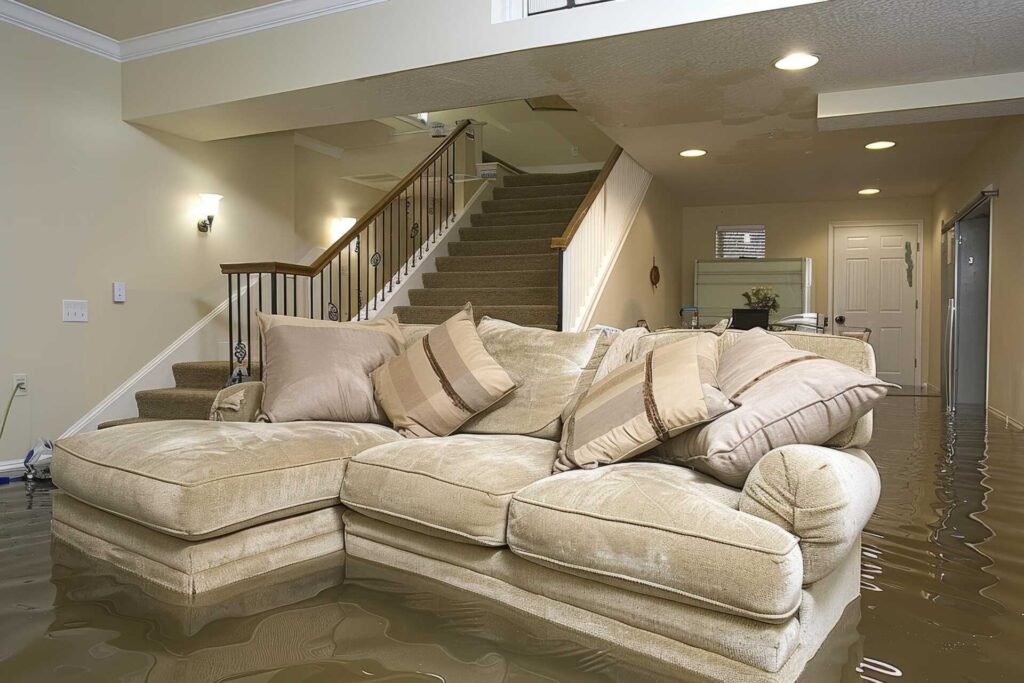
To effectively combat mold growth, you’ll need to remove all materials that have been contaminated by water. This step is essential to prevent further proliferation of mold spores in your home.
Here’s what you should focus on:
Carpets and Rugs: If these have absorbed water, they’re likely beyond saving. Remove them promptly.
Drywall and Insulation: Any drywall or insulation that’s been soaked should be cut out and discarded. Mold can thrive within these materials.
Furniture: Assess wooden or upholstered furniture for water damage. If they can’t be thoroughly cleaned and dried, consider discarding them.
Thoroughly Drying the Area
To effectively prevent mold growth after a flood, you need to thoroughly dry the area.
Ensure proper air circulation and use dehumidifiers to remove moisture from the air.
Additionally, check for hidden moisture sources that could hinder your drying efforts and promote mold development.
Importance of Air Circulation
While you may focus on removing visible mold, effective air circulation is essential for thoroughly drying the area post-flood. Proper airflow accelerates the drying process, reducing the risk of mold regrowth.
Here are three key benefits of ensuring good air circulation:
Prevents Moisture Accumulation: Stagnant air traps humidity, creating a breeding ground for mold spores.
Enhances Drying Efficiency: Increased airflow helps evaporate water more quickly, decreasing drying time.
Improves Indoor Air Quality: Fresh air circulation reduces musty odors and promotes a healthier environment.
To achieve ideal air circulation, open windows, use fans, and create cross-ventilation.
Use of Dehumidifiers
Dehumidifiers are essential tools for thoroughly drying areas affected by flooding, especially in environments where moisture levels remain high. They work by drawing in humid air, removing excess moisture, and releasing drier air back into the space.
As you deploy dehumidifiers, be sure to position them strategically throughout the affected area for maximum efficiency. Monitor humidity levels regularly; ideally, you want to maintain a level below 60% to inhibit mold growth.
Remember to empty the water collection tanks frequently to ensure peak performance. Combining dehumidifiers with proper ventilation enhances the drying process, making your efforts more effective.
Check Hidden Moisture Sources
Hidden moisture sources can be insidious, making thorough drying essential to prevent mold growth after a flood.
You need to check all areas where water may linger, particularly in hidden spaces. Here are three critical sources to inspect:
Behind Walls: Moisture can seep into wall cavities, creating a breeding ground for mold.
Beneath Flooring: Water can accumulate under carpets or floorboards, leading to hidden dampness.
Around Pipes: Leaks or condensation around plumbing can contribute to persistent moisture.
Applying Mold Inhibitors and Treatments
After successfully removing visible mold, applying mold inhibitors and treatments is essential in preventing future growth.
Start by selecting a high-quality mold inhibitor specifically designed for post-flood environments. These products often contain fungicides that target mold spores effectively.
Before application, ascertain surfaces are clean and dry to maximize effectiveness. Use a spray or brush application method, covering all affected areas thoroughly.
Pay special attention to porous materials, as they can retain moisture.
Once applied, allow the treatment to dry completely before sealing or repainting surfaces. This step helps lock in the inhibitor’s protective properties.
Additionally, consider using a sealant on areas prone to moisture exposure.
Regularly inspect these treated areas to ascertain they remain mold-free.
Monitoring for Future Mold Growth
Even with mold inhibitors applied, ongoing vigilance is necessary to ensure that mold doesn’t return.
To effectively monitor for future mold growth, you should focus on the following key practices:
Regular Inspections: Conduct thorough inspections of your home, particularly in areas prone to moisture, such as basements and bathrooms. Look for any signs of discoloration or dampness.
Humidity Control: Keep indoor humidity levels between 30% and 60%. Use dehumidifiers if needed, especially during humid months, to reduce the likelihood of mold growth.
Prompt Repairs: Address any leaks or water damage immediately. This minimizes the chances of mold taking hold, as stagnant water creates an ideal environment for growth.
Recap
Effectively managing mold removal post-flood is vital for your health and property. By evaluating water damage, ensuring safety, removing affected materials, thoroughly drying the area, and applying mold inhibitors, you can greatly reduce the risk of mold resurgence. Stay vigilant and monitor your space regularly to maintain a safe, healthy environment for you and your family.
Recent Posts
Structural Drying for Flooded Property Restoration
When water invades a structure, both speed and strategy matter. Flooded property restoration starts by
What Is Structural Drying After Flooding
The majority of flood damage problems can worsen when moisture remains trapped in building materials,
5 Tips for Structural Drying After Flooding
After a flood, you need to act fast, or moisture can continue spreading behind walls