
Contents
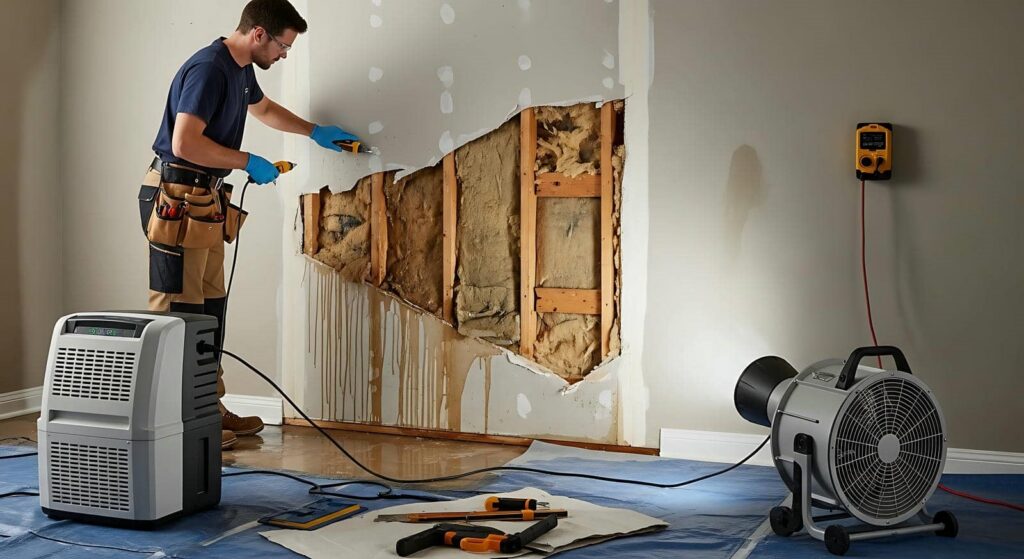
When dealing with water damage, it’s essential to have the right structural drying tools at your disposal. Air movers and dehumidifiers play key roles in enhancing airflow and removing excess moisture. Detection tools like infrared cameras and moisture meters help identify hidden issues. Understanding these tools can greatly influence the effectiveness of your drying efforts. So, which specific tools should you prioritize for ideal results?
Key Takeaways
- Air movers enhance moisture evaporation by strategically directing airflow across wet surfaces, reducing overall drying time.
- Dehumidifiers are crucial for removing excess moisture from the air, preventing mold growth and structural damage.
- Infrared cameras detect hidden moisture, ensuring thorough evaluations and effective drying in water-damaged areas.
- Flood pumps efficiently remove excess water from flooded spaces, with selection based on type, flow rate, and portability.
- Heat drying equipment accelerates evaporation rates by generating and circulating warm air, improving drying efficiency.
Air Movers
Air movers are essential tools in the structural drying process, effectively facilitating the evaporation of moisture from surfaces. By harnessing airflow dynamics, these devices create a controlled environment that accelerates drying efficiency.
You’ll find that positioning air movers strategically enhances airflow across wet areas, promoting faster moisture removal. Understanding airflow dynamics is vital; it helps you direct air toward the moisture-laden surfaces, ensuring that every corner receives adequate airflow.
When used in conjunction with other drying equipment, air movers can greatly reduce overall drying time, making them invaluable in any water damage restoration project.
Selecting the right type of air mover, whether it’s a low-profile or high-velocity model, can further optimize results. By mastering these tools, you’ll not only improve your drying techniques but also foster a sense of community among professionals who prioritize efficient restoration practices.
Dehumidifiers
While air movers are essential for promoting airflow, dehumidifiers play an equally important role in the structural drying process by removing excess moisture from the air.
You’ll find that dehumidifiers effectively lower humidity levels, which helps prevent mold growth and structural damage. Regular dehumidifier maintenance is vital; check filters and water collection tanks to guarantee peak performance.
Consider investing in energy recovery dehumidifiers, which are designed to operate more efficiently. These models reclaim energy from the air, reducing operational costs while still delivering impressive moisture removal rates.
When using dehumidifiers, strategically position them in areas with high humidity to maximize their effectiveness.
Infrared Cameras
Infrared cameras are essential tools for detecting hidden moisture that may not be visible to the naked eye.
They allow you to assess energy efficiency by identifying thermal variations in structures, which can indicate water intrusion.
With enhanced inspection accuracy, these cameras help guarantee thorough evaluations and effective drying processes.
Detecting Hidden Moisture
Detecting hidden moisture is crucial in effective water damage restoration, and infrared cameras are invaluable tools for this task.
These devices excel in moisture detection, allowing you to identify hidden leaks behind walls, under flooring, or within ceilings without invasive procedures. Utilizing thermal imaging, infrared cameras visualize temperature differences, highlighting areas with moisture accumulation.
This precision enables you to tackle issues before they escalate, ensuring a thorough and efficient restoration process. By integrating infrared technology into your toolkit, you not only enhance your ability to detect problem areas but also foster a sense of belonging in a community committed to excellence in water damage restoration.
Ultimately, these cameras are essential in safeguarding structures and preserving the integrity of your work.
Energy Efficiency Assessment
Energy efficiency assessments are critical in identifying and addressing issues that contribute to energy loss in buildings.
By utilizing infrared cameras, you can effectively measure energy consumption and uncover hidden thermal anomalies. These cameras allow you to visualize temperature variations, which helps you pinpoint areas of inefficiency.
With this data, you can establish efficiency metrics that guide your remediation efforts. You’ll gain insights into insulation effectiveness, air leaks, and moisture problems, all of which impact overall energy performance.
Enhanced Inspection Accuracy
When evaluating structural integrity and moisture issues, utilizing infrared cameras greatly enhances inspection accuracy.
These advanced tools allow you to identify temperature variations that indicate moisture presence, providing a non-invasive approach to inspections.
By incorporating infrared technology into your inspection techniques, you’ll experience significant accuracy improvement in detecting hidden leaks and dampness, which traditional methods might miss.
This level of precision not only streamlines the drying process but also helps prevent further damage.
As you adopt infrared cameras, you’ll foster a stronger sense of belonging within the community of professionals who prioritize cutting-edge solutions in water damage restoration.
Embracing this technology empowers you to deliver thorough assessments and guarantees your clients receive the best possible service.
Moisture Meters
Moisture meters are essential tools for evaluating water damage, and understanding their types is vital for effective usage.
You’ll find various models designed for specific applications, each with its own accuracy and calibration requirements.
Knowing how to choose and operate these meters can greatly enhance your structural drying efforts.
Types of Moisture Meters
Understanding the various types of moisture meters is essential for effectively evaluating water damage in structures.
You’ll encounter two primary moisture meter types: pin and pinless. Pin moisture meters use metal probes to penetrate materials, providing accurate readings of moisture content. They’re great for wood and drywall but can leave small holes.
Conversely, digital moisture meters, particularly pinless models, utilize electromagnetic signals to assess moisture levels without damaging the surface. These are ideal for larger areas and delicate materials.
Each type has its advantages, so knowing when to use each can greatly enhance your water damage assessment. By selecting the right moisture meter, you guarantee thorough evaluations and effective remediation strategies in your restoration efforts.
Usage and Applications
Choosing the right moisture meter plays an essential role in evaluating water damage, as their usage and applications can greatly influence the restoration process.
You’ll find moisture meters invaluable during water extraction and damage assessment. These tools help you pinpoint moisture levels in various materials, such as wood and drywall, allowing for targeted interventions.
By measuring moisture content, you can determine the effectiveness of drying efforts and identify areas that need additional attention.
Utilizing both pin-type and pinless meters enhances your ability to assess hidden moisture pockets, ensuring a thorough restoration.
Ultimately, having the right moisture meter enables you to make informed decisions, fostering a more efficient and effective restoration process for both you and your clients.
Accuracy and Calibration
While effective moisture detection is vital for successful restoration, the accuracy and calibration of moisture meters greatly impact their reliability.
To guarantee precise readings, it’s essential to implement proper calibration techniques regularly. This not only enhances measurement accuracy but also extends the lifespan of your tools.
You should familiarize yourself with the manufacturer’s guidelines and perform routine checks, as environmental factors can affect calibration over time.
Using reference materials during calibration can help maintain the integrity of your moisture meter.
By prioritizing accuracy, you guarantee that your assessments are trustworthy, leading to more effective water damage restoration outcomes.
Heat Drying Equipment
When dealing with water damage, utilizing heat drying equipment can greatly expedite the drying process by effectively removing moisture from affected areas.
These tools work by generating and circulating warm air, which accelerates evaporation rates. Integrating heat recovery systems maximizes efficiency, allowing you to reuse energy and reduce operational costs.
To enhance the effectiveness of your drying efforts, consider employing thermal imaging technology.
This allows you to pinpoint hidden moisture pockets that may otherwise go unnoticed, ensuring a thorough drying process. By combining heat drying equipment with advanced monitoring techniques, you can achieve superior results and prevent potential mold growth.
Incorporating these strategies not only speeds up restoration but also enhances the overall quality of your work.
You’ll not only feel confident in your methods but also foster trust within your community as you tackle water damage effectively.
Flood Pumps
Flood pumps are essential tools for efficiently removing excess water from flooded areas, helping to mitigate damage and speed up the restoration process.
In flood recovery, selecting the right pump type is critical for effective water removal. You’ll encounter several pump types, including submersible pumps, which are designed to operate underwater, and pedestal pumps, which work in shallower water levels.
Each type serves a specific purpose, so understanding these differences will help you make informed decisions tailored to your situation. Submersible pumps are ideal for deep flooding, while pedestal pumps are better for residual water.
When choosing a flood pump, consider factors like flow rate, power source, and portability. Efficiency is key, as faster water removal reduces the risk of mold and structural damage.
Structural Drying Mats
After removing excess water with flood pumps, focusing on drying the structure is essential.
One effective drying solution is the use of structural drying mats. These mats facilitate moisture extraction from floors and other surfaces, ensuring that the drying process is both rapid and efficient. By employing advanced structural drying techniques, these mats create a vacuum effect, drawing moisture out and allowing it to evaporate quickly.
You’ll find that structural drying mats are versatile and can be placed on various surfaces, including carpet, tile, and hardwood floors. They work best when combined with dehumidifiers and other drying equipment for ideal results.
When you choose to implement these mats, you’re not just enhancing the drying process; you’re also protecting your property from potential mold growth and structural damage. Investing in structural drying mats is a smart decision for anyone serious about effective water damage restoration.
Ventilation Fans
Ventilation fans play an essential role in the water damage restoration process by enhancing air circulation and promoting faster drying.
These fans help remove moisture-laden air, allowing drier air to flow in, which is vital for effective drying. By strategically placing ventilation fans, you can optimize fan efficiency, ensuring that every corner of the affected area receives adequate airflow.
When choosing fans, consider the size and power, as these factors directly impact air circulation. High-velocity fans are particularly effective, as they can move large volumes of air quickly, speeding up the drying process.
It’s important to monitor the airflow direction; positioning fans to create a cross-ventilation effect can greatly improve drying results.
Remember, the quicker you can circulate air in the space, the less likely you’re to face secondary damage, like mold growth.
Invest in quality ventilation fans and see how they transform your restoration efforts.
Hygrometers
Hygrometers are essential tools for accurately measuring humidity levels in water-damaged environments. Using a hygrometer helps you determine the moisture content in the air, which is vital for effective drying.
Digital hygrometers are particularly beneficial due to their precision and ease of use. They provide real-time data, allowing you to monitor humidity levels continuously.
Regular hygrometer calibration guarantees your readings remain accurate, giving you confidence in your assessments.
You’ll want to check calibration periodically, especially after significant temperature changes or other environmental factors that could affect performance.
Frequently Asked Questions
How Long Does Structural Drying Typically Take After a Water Damage Incident?
Structural drying typically takes three to seven days. However, drying duration varies based on factors influencing moisture levels, airflow, temperature, and material types. You’ll want to monitor these elements for effective drying results.
Can I Rent Structural Drying Tools Instead of Buying Them?
Yes, you can rent structural drying tools instead of buying them. Tool rental often reduces costs, providing a cost comparison that can save you money, especially for short-term projects or infrequent use.
What Safety Precautions Should I Take During Structural Drying?
During structural drying, you should wear protective gear like gloves and masks. Make certain you’ve got safety equipment, such as goggles and rubber boots, to minimize exposure to contaminants and guarantee your safety throughout the process.
How Do I Know if My Home Is Completely Dry?
You’ll know your home is completely dry by using moisture detection tools and observing drying indicators like reduced humidity levels, dry surfaces, and absence of odors. Regular checks guarantee you maintain a safe, comfortable environment.
Are There Any Environmental Concerns With Using These Drying Tools?
Yes, some drying tools can have environmental impacts due to chemical emissions. It’s vital to choose equipment that minimizes these effects, ensuring your home dries effectively while also protecting the environment for your community and future generations.
Summary
Utilizing top structural drying tools is essential for effectively managing water damage. Did you know that about 14,000 people experience a water damage emergency each day in the U.S.? By employing air movers, dehumidifiers, and moisture detection tools, you can greatly reduce drying time and prevent costly mold growth. Investing in the right equipment not only protects your property but also safeguards your health and well-being, ensuring a swift return to normalcy after a water-related incident.
Recent Posts
3 Best Mold Prevention Drying Tips
When moisture lingers, mold can start growing in less than 48 hours, so your drying
Structural Drying for Flooded Property Restoration
When water invades a structure, both speed and strategy matter. Flooded property restoration starts by
What Is Structural Drying After Flooding
The majority of flood damage problems can worsen when moisture remains trapped in building materials,