
Contents
After a flood, mold can become a serious issue if not addressed promptly. You need to assess the damage carefully and take immediate action to minimize risks. Safeguarding safety during cleanup is essential, as is effectively ventilating the area. Each step in the mold removal process is critical for preventing future growth. So, what specific techniques and strategies should you implement to ensure a thorough and safe cleanup?
Key Takeaways
- Assess the damage by inspecting affected areas for visible mold growth and documenting findings to guide remediation efforts.
- Remove saturated materials like carpets and insulation to prevent further mold spread and ensure effective cleaning.
- Set up dehumidifiers and fans to lower humidity levels and promote airflow for faster drying of the affected space.
- Clean surfaces with water and detergent, followed by EPA-approved disinfectants, while wearing protective gear.
- Maintain proper ventilation throughout the process by opening windows and doors to facilitate air circulation and reduce moisture.
Assessing the Damage
When tackling mold removal, the first step is evaluating the damage. Start by identifying the mold types present, as this will influence your approach. Common types include black mold, which can pose health risks, and white mold, often found in damp areas.
Conduct a thorough damage evaluation by inspecting affected surfaces, including walls, ceilings, and flooring. Look for visible signs of mold growth, such as discoloration or a musty odor. Don’t forget to check hidden areas, like behind appliances or inside walls, where moisture might accumulate.
Document any findings, detailing the extent of the damage. This information will guide you in determining the necessary remediation steps and help communicate with professionals if needed.
Safety Precautions Before Starting Mold Removal
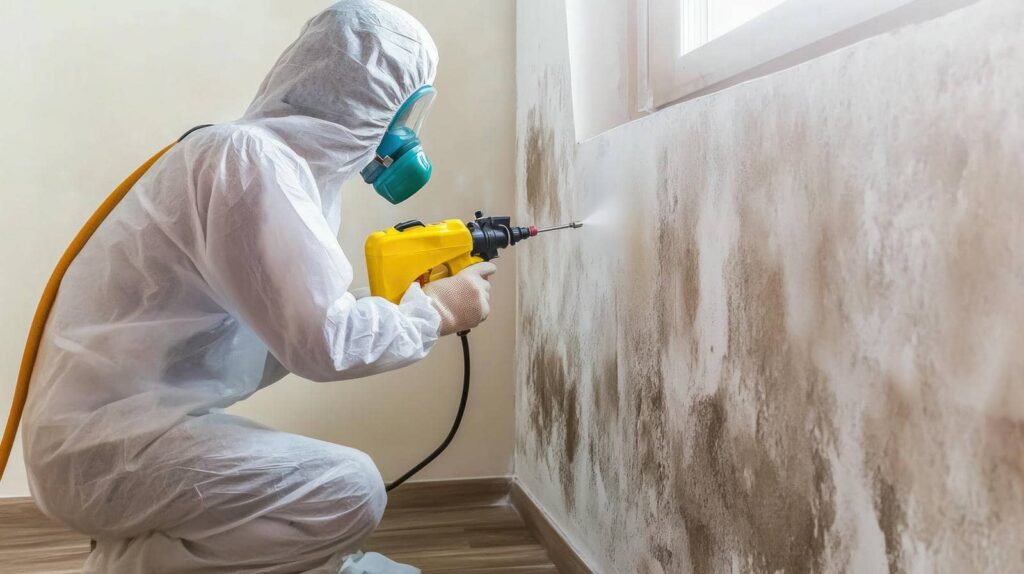
Before you begin mold removal, it’s vital to wear protective gear to safeguard against spores and allergens.
Ensure proper ventilation in the area to minimize inhalation risks and promote air circulation.
Taking these precautions will help create a safer environment as you tackle the mold problem.
Wear Protective Gear
To effectively tackle mold removal, it’s essential to prioritize your safety by wearing appropriate protective gear.
Start by donning a high-quality protective mask that filters out mold spores, preventing inhalation of harmful particles. This step is important, as mold can cause respiratory issues and other health problems.
Next, wear rubber gloves to shield your hands from direct contact with mold and cleaning solutions, which can irritate your skin. These gloves protect you and provide a better grip while you work.
Ensure Proper Ventilation
After equipping yourself with protective gear, ensuring proper ventilation in the area is essential for a safe mold removal process.
Effective airflow management helps minimize the concentration of mold spores in the air, reducing health risks during cleanup. Start by opening windows and doors to create cross-ventilation.
If your space has ventilation systems, make sure they’re operational to aid in circulating clean air. Consider using fans to enhance airflow, directing them towards open exits to expel contaminated air.
Always monitor air quality; if you notice an increase in mold spores, take additional precautions.
Proper Ventilation Techniques
To effectively remove mold, you need to ensure proper ventilation in the affected area.
Open windows and doors to allow fresh air in, and use fans to promote air circulation.
This approach helps reduce humidity levels and prevents mold spores from spreading during the removal process.
Open Windows and Doors
Creating a well-ventilated space is vital when tackling mold removal, and opening windows and doors can greatly enhance air circulation.
By allowing fresh air to flow through, you’re utilizing natural ventilation, which helps reduce indoor humidity levels. This is essential, as mold thrives in damp environments.
When you let in outside air, you’re improving air quality and expediting the drying process of any lingering moisture.
Make sure you keep windows and doors open for as long as possible during the mold removal process. This simple step notably aids in humidity control, making it harder for mold to return.
Embrace these techniques, and you’ll create a healthier, more inviting home environment for yourself and your loved ones.
Use Fans Effectively
Using fans effectively can greatly enhance your efforts in mold removal.
Start by choosing the right fan types; box fans and oscillating fans work well for circulating air. Position them strategically throughout the affected area to maximize airflow.
Place one fan near the source of moisture, directing airflow towards open windows or doors. This encourages the exchange of damp air with drier outside air.
Use additional fans to create cross-ventilation, ensuring all corners of the space receive airflow. Keep fans running continuously until the area is completely dry.
Remember, proper fan placement is essential in preventing mold spores from settling and proliferating.
Cleaning and Disinfecting Surfaces
Although mold can pose significant health risks and damage to your property, effectively cleaning and disinfecting surfaces can mitigate these dangers.
Start by using appropriate cleaning techniques, like scrubbing affected areas with a mixture of water and detergent. Focus on high-touch surfaces, including countertops, doorknobs, and fixtures, where mold spores are likely to linger.
Once you’ve cleaned the surfaces, it’s essential to apply disinfecting solutions that are effective against mold. Look for EPA-approved products specifically labeled for mold removal. Make sure to follow the manufacturer’s guidelines for proper application and contact time.
Don’t forget to wear protective gear, such as gloves and masks, to safeguard your health during this process.
Removing Affected Materials
When mold has infiltrated materials like drywall, carpeting, or insulation, it’s vital to remove those affected items promptly to prevent further spread and health risks.
Start by identifying the extent of the damage; any material that feels damp or shows visible signs of mold should be removed. Use mold removal techniques that prioritize safety, such as wearing gloves, masks, and goggles during the process.
Carefully cut away the affected materials, ensuring you don’t disturb mold spores that could become airborne.
Once removed, it’s important to dispose of these materials properly. Seal them in plastic bags to contain any remaining spores before placing them in the trash. This affected materials disposal method minimizes the risk of cross-contamination.
Using Mold Removal Products
When tackling mold removal, it’s essential to choose effective solutions that target the specific type of mold you’re dealing with.
Always remember to follow safety precautions, as some products can be harmful if not used correctly.
Understanding these factors will help ensure a successful mold remediation process.
Choose Effective Solutions
To effectively tackle mold infestations, selecting the right mold removal products is essential. Different mold types require specific removal methods, so understanding your situation is key.
For instance, bleach can be effective against surface molds, while specialized antifungal sprays may work better for porous materials. Always read labels to ensure products are appropriate for your needs.
Consider eco-friendly options if you’re concerned about harsh chemicals. Additionally, while DIY solutions like vinegar can be useful, they may not always eliminate mold completely.
Assess the severity of the infestation; sometimes professional-grade products or services are necessary. By choosing the right solution, you’ll foster a healthier environment and feel more at ease in your space, knowing you’ve tackled mold effectively.
Follow Safety Precautions
While mold removal products can be effective, it’s essential to prioritize safety during the cleaning process.
Different mold types, such as black mold or Aspergillus, can pose significant health risks, including respiratory issues and allergic reactions.
Before you start, wear protective gear like gloves, goggles, and a mask to shield yourself from spores and harmful chemicals.
Ensure proper ventilation in the area by opening windows and using fans.
Read the product labels carefully to understand any specific precautions required.
Keep children and pets away from the cleaning zone to minimize exposure.
Drying the Area Thoroughly
Thoroughly drying the area is essential in preventing mold from returning after removal. If you want to ensure effective moisture control, follow these steps:
Use Dehumidifiers: Set up dehumidifiers in affected areas to reduce humidity levels quickly. This helps eliminate moisture that could foster mold growth.
Ventilate the Space: Open windows and doors to promote airflow. Consider using fans to circulate air, which aids in the drying process.
Inspect and Remove Wet Materials: Identify and remove any saturated materials, such as carpets or insulation. These can trap moisture and serve as breeding grounds for mold.
Preventing Future Mold Growth
Even after successfully removing mold, it’s crucial to implement strategies that prevent its return. Start by using mold-resistant materials in your home, especially in areas prone to moisture, like bathrooms and basements. These materials can greatly reduce the likelihood of mold growth.
Additionally, establish effective humidity control by keeping indoor humidity levels below 60%. You can achieve this by using dehumidifiers and ensuring proper ventilation throughout your space.
Regularly inspect areas where moisture accumulates, such as around windows, pipes, and appliances. Fix any leaks promptly to prevent water buildup.
It’s also beneficial to clean gutters and ensure proper drainage around your property. By taking these proactive measures, you can create a healthier environment for you and your loved ones, fostering a sense of belonging and safety in your home.
Professional Mold Remediation Services
When it comes to tackling mold issues, professional mold remediation services offer an extensive solution that goes beyond simple cleaning.
These experts utilize advanced techniques to ensure your space is thoroughly inspected and treated, providing peace of mind for you and your community.
Here are three key benefits of hiring professionals:
Comprehensive Mold Inspection: Professionals conduct thorough assessments to identify the extent of the mold problem, ensuring no hidden growth remains.
Effective Remediation Techniques: They employ specialized methods tailored to your specific situation, addressing both visible mold and underlying moisture issues.
Health and Safety Assurance: By following safety protocols, professionals minimize health risks associated with mold exposure, creating a safer environment for you and your loved ones.
Investing in professional mold remediation resolves immediate concerns and helps foster a healthier living space for everyone involved.
Regular Maintenance and Monitoring
While you may think mold issues are resolved after professional remediation, regular maintenance and monitoring are essential for long-term prevention.
To keep your home mold-free, schedule routine mold inspections. These inspections help identify potential problem areas before they become significant issues.
Moisture control is another key factor in preventing mold growth. Confirm your home is well-ventilated, especially in high-moisture areas like bathrooms and kitchens.
Use dehumidifiers in damp spaces and promptly address any water leaks or condensation.
Regularly check your home’s exterior for signs of water damage, such as peeling paint or discoloration.
Maintaining gutters and downspouts can also prevent water accumulation around your foundation.
Frequently Asked Questions
How Long Does It Take for Mold to Grow After Flooding?
After flooding, mold growth can begin within 24 to 48 hours if conditions are right. It thrives in damp environments, so addressing flood damage promptly is essential to prevent extensive mold issues later on.
Can I Use Bleach to Remove Mold?
You can use bleach to remove mold, but its effectiveness varies. While it kills surface mold, it doesn’t address mold toxicity within porous materials. For thorough removal, consider using specialized mold removers instead.
Are There Specific Mold Removal Products I Should Avoid?
When considering mold removal techniques, avoid products containing ammonia or strong solvents. They can create harmful fumes. Instead, opt for safe cleaning products like vinegar or specialized mold removers that effectively eliminate mold without health risks.
What Should I Do if Mold Returns After Removal?
Isn’t it ironic? You removed mold, yet it’s back! To combat this, implement mold prevention tips like controlling moisture and airflow. Use effective mold remediation techniques, and stay vigilant to keep your space mold-free.
How Can I Tell if Mold Is Completely Gone?
To determine if the mold’s completely gone, conduct a thorough visual inspection for signs of growth. Additionally, consider air testing to measure mold spores in the environment, ensuring you’ve eliminated any hidden issues.
Conclusion
In the aftermath of flooding, tackling mold is like extinguishing a wildfire before it spreads. By swiftly evaluating damage, ensuring safety, and employing effective cleaning and drying techniques, you can reclaim your space from mold’s grasp. Remember, it’s not just about removal; it’s about creating an environment where mold can’t thrive. Regular maintenance and monitoring act as your shield, keeping your home safe and sound, like a fortress against the relentless tide of moisture and decay.
Recent Posts
Top Tips for Effective Mold Remediation After Flooding
Imagine a family returning home after a flood, only to discover mold creeping along their
Essential Steps for Mold Remediation After Flooding
After flooding, addressing mold remediation is vital to prevent health risks and further damage. You’ll
Top Mold Remediation Strategies Post-Flooding
Is it true that effective mold remediation can greatly reduce health risks after flooding? Understanding