
Contents
Many flood claims start in the basement, which means you’re often racing against hidden damage as soon as water appears. Flooded basement cleanup isn’t just pumping out water; you need to stop the source, cut power, remove standing water, dry materials, inspect for mold and structural issues, and disinfect the space before repairs begin. The order matters, because one missed step can turn a small flood into a long-term problem.
Key Takeaways
- Flooded basement cleanup is the process of removing water, stopping the source, and making the area safe to enter.
- It includes pumping out standing water and drying floors, walls, and hidden cavities with dehumidifiers and air movers.
- Cleanup also involves inspecting for mold, structural damage, and moisture before repairs begin.
- Salvageable surfaces are cleaned and disinfected, and damaged flooring, insulation, and systems are repaired or replaced.
- Proper cleanup helps protect health, restore home safety, and prevent future flooding through better drainage and maintenance.
Flooded Basement Cleanup: What to Do First
Before you do anything else, shut off the electricity to the flooded area if you can do it safely, then stop the water source and remove people and pets from the basement.
Next, contact your utility provider or a qualified professional if you can’t verify conditions.
In your emergency response, wear boots, gloves, and a mask before entering.
Document the damage with photos, then move valuables and loose items to dry storage.
Open windows only if the outside air is dry and safe, and start ventilation.
Don’t use appliances or outlets in standing water.
Your basement restoration plan should begin with a quick hazard check, followed by water removal, drying, and cleanup.
Acting fast helps your household stay safe and gives you a clear path forward together.
Stop the Water and Shut Off Power
Once you’ve confirmed it’s safe to approach, stop the water at its source right away and shut off power to the flooded area if you can do it without entering standing water.
Locate the main water valve, then close it fully to cut off supply from active water sources. If the leak comes from an appliance, isolate that line as well.
Next, turn off electricity at the breaker panel for the affected basement circuits, or call emergency contacts if the panel is exposed, wet, or hard to reach.
Use a flashlight, not candles, to check labels and confirm the correct switch.
Keep everyone clear of the area until you’ve verified the water has stopped and the power is off. Acting fast helps your household stay safe and gives your crew a solid start together.
Remove Standing Water Fast
Start removing standing water as quickly as you can with the right equipment, such as a wet/dry vacuum, submersible pump, or utility pump, depending on the depth and volume.
You’ll speed up standing water removal by working from the lowest point toward the drain or discharge route, keeping hoses clear and outlets secure. If the water level keeps rising, pause and check for a failed sump pump installation or a blocked discharge line.
Wear waterproof boots and gloves, and avoid stirring up debris that can clog your equipment. Move steadily, empty containers often, and monitor the floor for hidden pockets of water.
Fast removal limits structural stress, reduces contamination, and helps you and your crew stay organized during cleanup.
Dry Out Walls, Floors, and Contents
After you remove standing water, you need to dry wall cavities, baseboards, and framing with dehumidifiers, air movers, and, if needed, controlled demolition of damaged materials.
You should also lift wet flooring, remove soaked insulation, and spread out salvageable contents so air can reach every surface.
Monitor moisture levels until walls, floors, and contents return to safe dry conditions and mold can’t take hold.
Wall Drying Methods
Drying flooded walls correctly prevents hidden moisture from turning into mold, swelling, and structural damage.
You should first remove baseboards and open cavities so air can reach the wet wall assembly. Then set up strong dehumidifier usage and direct airflow across the surface with fans, keeping doors open when possible.
If you have wall insulation, inspect it closely; saturated insulation usually needs removal because it traps water against framing.
Use a moisture meter to track progress in drywall and studs, and keep drying until readings stabilize near normal.
Don’t rush patching or painting, because sealed moisture can stay trapped behind finishes.
When you work methodically, you protect your home and help your cleanup team feel confident together.
Floor And Content Drying
Once the walls are drying, you should shift to the floors and contents so moisture doesn’t linger in materials and belongings.
Pull up wet rugs, remove padding, and lift furniture onto blocks so air can circulate under each item.
Run dehumidifiers and fans together to speed evaporation and keep moisture control steady.
Check subflooring, carpet backing, and cardboard boxes for hidden dampness, because flood damage often stays trapped there after the surface looks dry.
You should separate salvageable items from items that need disposal, then dry books, textiles, and electronics with care.
Rotate contents often, measure humidity, and keep the space ventilated.
When you act quickly, you protect your home and help your crew feel confident that cleanup is on track.
Check for Mold and Damage
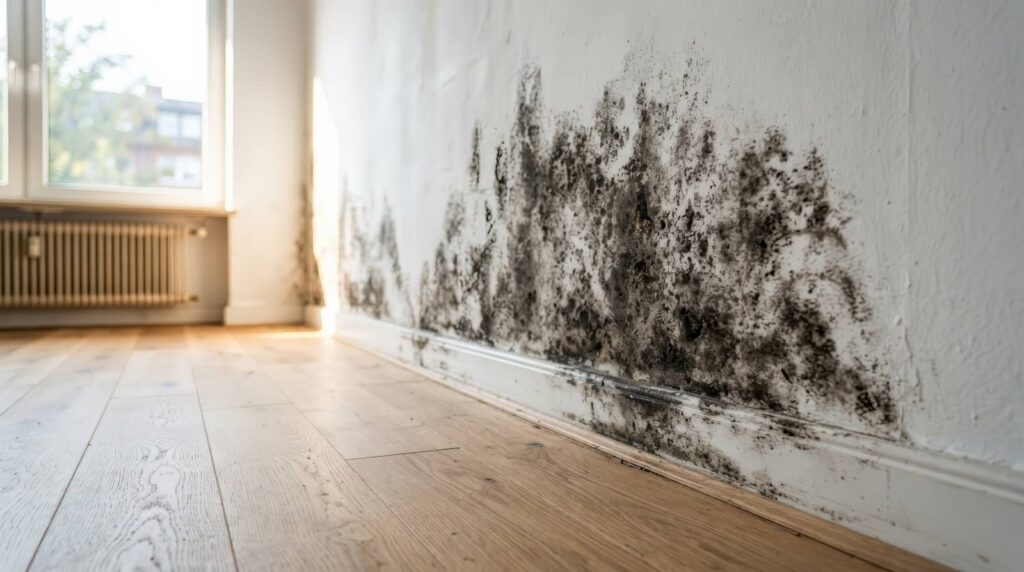
Once the area is dry, you should inspect walls, flooring, and stored items for mold growth signs like discoloration, musty odor, or visible spotting.
Check for structural damage by looking for warped materials, cracked surfaces, loosened joints, and soft or sagging sections.
If you find any of these issues, you’ll need to document them and plan the right cleanup or repairs.
Mold Growth Signs
Even after the water’s gone, you should check the basement for mold growth signs before you start rebuilding, because hidden moisture can trigger damage fast.
Look for musty odors, dark spotting on walls, fuzzy patches on stored items, and discoloration around baseboards, boxes, and HVAC components. If surfaces feel damp or cool longer than expected, you likely still have trapped moisture.
Use a flashlight to inspect corners, behind appliances, and under shelving. Good mold prevention starts with prompt drying and removing porous materials that stayed wet too long.
Keep humidity control in place with a dehumidifier and steady ventilation so spores can’t spread. When you find suspect areas, isolate them, clean them safely, and monitor them closely to keep your space healthy and your household confident.
Structural Damage Inspection
After you’ve checked for mold, inspect the basement’s structure for water-related damage before any repairs begin.
You should look for cracks in walls, bowed studs, rusted fasteners, and warped framing. Tap concrete and listen for hollow areas, then mark any loose or crumbling spots.
Check floor joists, sill plates, and support posts for swelling, rot, or movement that could affect foundation stability.
Review water drainage paths outside and inside, since poor flow can keep the structure wet and worsen damage.
If doors stick or floors slope, note it. You’re not just fixing a room; you’re protecting your home team’s safety and long-term value.
Document every defect with photos and measurements, then share them with a qualified inspector before you rebuild.
Clean and Disinfect the Basement
Before you put anything back in the basement, scrub all salvageable surfaces with hot water and detergent to remove mud, silt, and residue. Then apply a disinfectant labeled for flood cleanup to kill bacteria and mold spores.
Choose cleaning supplies that match the material you’re treating, and follow the product’s contact time exactly so the disinfection methods work as intended. Wear gloves, eye protection, and a respirator if the area still smells musty.
Work from top to bottom, rinsing tools often so you don’t spread contamination. After each pass, wipe away excess moisture and improve airflow with fans or dehumidifiers.
You’re part of a community that gets through this by staying methodical, documenting what you clean, and repeating any step that leaves staining, odor, or visible growth.
Repair Electrical, HVAC, and Floors
Once the basement is clean and fully dry, inspect the electrical system, HVAC equipment, and flooring for flood damage before turning anything back on.
You should call a licensed electrician for damaged outlets, breakers, or wiring so electrical safety stays intact. Have an HVAC technician check motors, ducts, and controls; proper HVAC maintenance keeps the system reliable and reduces hidden corrosion.
Replace warped subflooring, loose tiles, or soaked carpet padding to prevent uneven surfaces and lingering odors.
- You protect your home.
- You protect your family.
- You restore comfort.
- You regain confidence.
If you spot rust, burn marks, or sagging floorboards, don’t guess—repair or replace the affected parts.
When you act quickly, you’re back in a safer, stronger space with your community around you.
Prevent Future Basement Flooding
Now that the basement is repaired, you can reduce the chance of another flood by addressing the source of the water. Start with drainage solutions that move runoff away from your foundation, including clean gutters, extended downspouts, and properly graded soil.
Test your sump pumps, add a battery backup, and schedule maintenance so they’ll work when storms hit. Use waterproofing techniques such as sealing wall cracks, applying interior sealants, and installing a vapor barrier where needed.
Finish with landscaping modifications that keep water out of low spots, like building swales, adjusting plant beds, and reshaping hardscapes. When you combine these steps, you protect your home and join other prepared homeowners who don’t wait for the next storm to act.
Frequently Asked Questions
What Permits Are Needed After a Basement Flood Cleanup?
You’ll usually need restoration permits if you replace drywall, wiring, plumbing, or structural materials after flood assessment. Check with your local building department first; they’ll confirm inspection steps and any permit requirements for your repair scope.
How Much Does Professional Flooded Basement Cleanup Typically Cost?
You’ll typically pay $500 to $3,000 for professional flooded basement cleanup, but cost factors like water depth, contamination, and cleanup methods can push prices higher. You’re not alone; crews tailor services to your basement’s damage.
Can Insurance Cover Basement Flood Damage and Cleanup Expenses?
Yes—insurance can cover basement flood damage and cleanup expenses, but it’s a maze of rules. You’ll need insurance claims filed fast, and your coverage limits may cap payouts, so review your policy carefully.
How Long Does Basement Flood Cleanup Usually Take?
You’ll usually finish basement flood cleanup in one to five days, depending on cleanup duration, water extraction needs, drying time, and damage severity. You can shorten it with fast action, proper equipment, and expert support.
When Should I Call a Professional Restoration Company?
Call a professional restoration company right away if you’ve got standing water, sewage, or hidden moisture—you can’t fully fix it yourself. They’ll handle water damage restoration, share flood prevention tips, and help you protect your home.
Wrap-Up
Flooded basement cleanup means you act fast to protect your home and health. You stop the water, shut off power, remove standing water, and dry every surface completely. For example, if a sump pump fails after a storm, you may need to pump out several inches of water, run dehumidifiers, and replace soaked drywall before mold starts. Then you inspect wiring, HVAC, and flooring, and fix the cause so flooding doesn’t happen again.
Recent Posts
Why Prevent Mold After Structural Drying?
After structural drying, you still need to prevent mold because hidden moisture can remain in
3 Best Mold Prevention Drying Tips
When moisture lingers, mold can start growing in less than 48 hours, so your drying
Structural Drying for Flooded Property Restoration
When water invades a structure, both speed and strategy matter. Flooded property restoration starts by