
Contents
After water damage, swift action is necessary to prevent mold growth in your home. Start by removing any standing water and drying affected areas thoroughly. Utilize dehumidifiers and air movers to maintain ideal conditions. It’s also essential to clean and disinfect surfaces meticulously. Monitoring humidity levels and inspecting for hidden mold can make all the difference. Understanding these steps is important, as it sets the foundation for a healthier living environment. What happens if you overlook these details?
Key Takeaways
- Act quickly to remove standing water and address the source of water intrusion to prevent mold growth.
- Thoroughly dry affected areas using dehumidifiers and ensure proper ventilation to reduce moisture levels.
- Monitor humidity levels, keeping them between 30-60%, and inspect for hidden moisture in dark, damp spaces.
- Clean and disinfect surfaces to eliminate mold spores and prevent future growth.
- Seek professional assistance if mold indicators arise, as experts can effectively identify and remediate hidden mold issues.
Act Quickly to Remove Standing Water
When you experience water damage, acting quickly to remove standing water is essential, as it prevents mold growth and further deterioration of your property.
Begin by identifying the source of the water intrusion and stopping it if possible. Use a wet/dry vacuum or pumps to extract standing water, ensuring you reach all affected areas. Pay close attention to corners, crevices, and behind furniture, as water often accumulates in these spots.
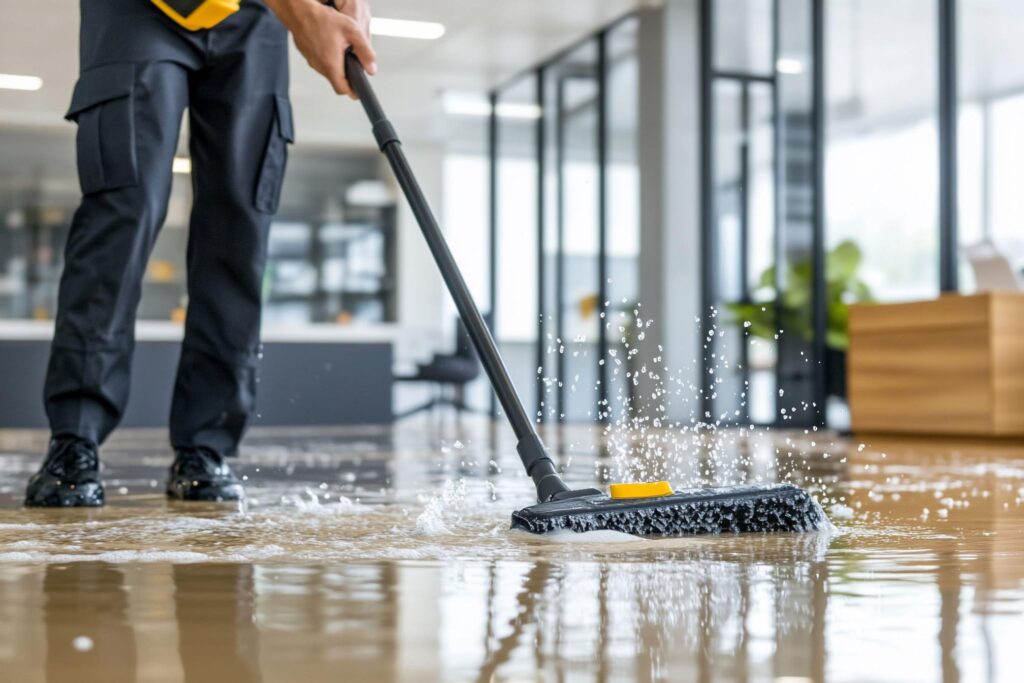
Once you’ve removed the bulk of the water, mop or sponge the remaining moisture to eliminate any traces. Dispose of any absorbent materials, like rugs or carpets, that can’t be thoroughly dried.
Confirm proper ventilation by opening windows or using fans to facilitate airflow. The quicker you act, the better your chances are of safeguarding your home from mold and structural damage.
Your diligence now can save you significant costs and stress down the road.
Dry Affected Areas Thoroughly
To prevent mold growth, you must dry affected areas thoroughly.
Start by removing any standing water, then utilize dehumidifiers effectively to reduce humidity levels.
Finally, ensure proper ventilation in all impacted spaces to facilitate moisture evaporation.
Remove Standing Water
Act quickly to remove standing water, as prompt action is vital in preventing mold growth after water damage. Begin by identifying affected areas and using pumps or wet vacuums to extract water efficiently. This step is essential to minimize moisture levels and inhibit mold spores from thriving.
| Equipment | Purpose |
|---|---|
| Submersible Pump | Removes large volumes of water |
| Wet/Dry Vacuum | Extracts residual moisture |
| Towels | Absorbs remaining dampness |
| Mops | Cleans surfaces thoroughly |
| Fans | Enhances air circulation |
After extraction, make sure all areas are thoroughly dried to avoid hidden moisture pockets. This methodical approach fosters a safe environment, reducing the risk of mold infestation.
Use Dehumidifiers Effectively
Using dehumidifiers effectively is crucial for thoroughly drying affected areas and preventing mold growth after water damage.
First, choose a dehumidifier with adequate capacity for your space; typically, a unit that can remove at least 30 pints of moisture per day is recommended for small to medium areas.
Position the dehumidifier centrally in the affected zone to maximize airflow. Set the humidity level to around 30-60%, as this range inhibits mold growth.
Run the machine continuously until moisture levels stabilize, checking its reservoir regularly to avoid overflow.
Monitor the drying process with a hygrometer for precision.
Finally, verify that the dehumidifier’s air filter is clean to maintain efficiency and effectiveness.
This methodical approach will help you achieve lasting dryness and mold prevention.
Ventilate Affected Spaces
After employing dehumidifiers to remove excess moisture, proper ventilation of affected spaces is essential for thorough drying.
Open windows and doors to promote airflow, and utilize fans to circulate air effectively. Make certain that air can move freely by rearranging furniture and removing obstacles.
If possible, create cross-ventilation by opening windows on opposite sides of the room. This technique helps exchange humid air with drier outdoor air, speeding up the drying process.
You should also consider using exhaust fans in bathrooms and kitchens to draw out moisture.
Remember, stagnant air can lead to mold growth, so keep the air moving consistently until the area is completely dry.
Use Dehumidifiers and Air Movers
To effectively reduce humidity levels and accelerate the drying process, employing dehumidifiers and air movers is essential in the aftermath of water damage. Dehumidifiers extract moisture from the air, lowering the humidity that fosters mold growth.
Position them strategically in affected areas, ensuring they’re not obstructed by furniture or walls.
Air movers, or fans, complement dehumidifiers by enhancing air circulation. Place them in a manner that creates a cross-flow, directing moist air toward the dehumidifier. This method maximizes efficiency, allowing both devices to work harmoniously.
Monitor humidity levels with a hygrometer; aim for relative humidity below 60%. Regularly check and empty the dehumidifier’s reservoir to maintain peak performance.
Clean and Disinfect Surfaces
Thoroughly cleaning and disinfecting surfaces is essential in the wake of water damage to eliminate any lingering contaminants and prevent mold growth.
Here’s a methodical approach to ensure your efforts are effective:
Remove Debris: Start by clearing any visible debris, such as dirt, dust, or damaged materials. This creates a clean slate for deeper cleaning.
Use Appropriate Cleaners: Apply a solution of water and a suitable disinfectant. For non-porous surfaces, a bleach solution (1 cup bleach to 1 gallon of water) can be effective in killing mold spores. Always wear gloves and ensure proper ventilation.
Scrub and Rinse: Use a scrubbing brush to thoroughly clean the surfaces, ensuring you reach corners and crevices. Rinse with clean water to remove any residual cleaner.
Monitor Humidity Levels
To prevent mold growth, you need to monitor humidity levels closely.
The ideal humidity range is between 30% and 60%, which you can measure using a hygrometer.
Additionally, improving ventilation techniques can help maintain these levels effectively.
Ideal Humidity Range
How can you effectively monitor humidity levels to prevent mold growth after water damage? Maintaining the ideal humidity range is essential. Aim for a relative humidity of 30-60%.
Here are three steps to help you achieve this:
Ventilation: Ensure proper airflow in your space. Open windows and use exhaust fans in high-moisture areas like kitchens and bathrooms.
Dehumidification: Use a dehumidifier to remove excess moisture, especially in damp areas. Regularly check and empty the reservoir as needed.
Temperature Control: Keep indoor temperatures moderate. Higher temperatures can increase humidity levels, so consider using air conditioning during warm months.
Use of Hygrometers
While managing humidity levels is vital for preventing mold growth after water damage, using hygrometers provides a reliable way to monitor these levels accurately.
These devices measure the moisture content in the air, helping you determine if your environment remains within the ideal humidity range. To ensure effectiveness, place hygrometers in various rooms, especially those prone to dampness.
Regularly check the readings; if humidity exceeds 60%, take immediate action, like using dehumidifiers or increasing airflow. Calibration is essential, so verify your hygrometer’s accuracy periodically.
Ventilation Improvement Techniques
Improving ventilation is essential for controlling humidity levels and preventing mold growth after water damage.
To effectively manage humidity, consider these techniques:
Use Exhaust Fans: Install exhaust fans in kitchens and bathrooms to expel moist air directly outside, reducing indoor humidity.
Open Windows: When weather permits, open windows to allow fresh air circulation. This helps dilute and remove indoor moisture.
Install Ventilation Systems: Consider mechanical ventilation systems that continuously exchange indoor air with drier outdoor air, maintaining ideal humidity levels.
Inspect for Hidden Mold Growth
Where might hidden mold be lurking after water damage? Start by checking areas that often retain moisture, like behind walls, under carpets, and in ceiling tiles.
Use a moisture meter to identify damp spots; anything above 20% moisture content is a red flag. Don’t forget to inspect behind appliances, such as refrigerators and washing machines, where leaks can occur unnoticed.
Next, look in dark, damp spaces like basements and crawl spaces. Mold thrives in these conditions, so pay close attention to corners and crevices.
You should also examine HVAC systems, as they can circulate mold spores throughout your home.
Finally, keep an eye out for unusual odors, which can indicate hidden mold growth. If you detect any signs, consider hiring a professional to conduct a thorough inspection.
Addressing potential mold early on can prevent larger issues and foster a healthier living environment for you and your loved ones.
Wrap-Up
By acting swiftly and methodically, you can safeguard your home from mold’s relentless advance after water damage. Think of your efforts as a shield, protecting your living space from unseen invaders. Remove standing water, dry thoroughly, and maintain low humidity levels to keep mold at bay. Regular inspections and diligent cleaning will ensure your environment remains healthy. Remember, vigilance is key—stay proactive to prevent mold from taking root and compromising your well-being.
Recent Posts
Structural Drying for Flooded Property Restoration
When water invades a structure, both speed and strategy matter. Flooded property restoration starts by
What Is Structural Drying After Flooding
The majority of flood damage problems can worsen when moisture remains trapped in building materials,
5 Tips for Structural Drying After Flooding
After a flood, you need to act fast, or moisture can continue spreading behind walls