
Contents
Water damage can lead to mold growth if not handled promptly. To prevent this, you need to act quickly and follow a series of essential steps. From removing standing water to monitoring moisture levels, each action plays an important role in safeguarding your property. Understanding these steps is critical, especially if you want to protect your health and investment. Let’s explore the key strategies to effectively stop mold in its tracks.
Key Takeaways
- Remove standing water immediately using pumps or wet vacuums to prevent mold growth.
- Increase airflow by opening windows and using fans to help dry affected areas quickly.
- Use dehumidifiers to maintain humidity levels between 30% and 50%, preventing mold proliferation.
- Clean and disinfect all affected surfaces thoroughly, using appropriate solutions and protective gear.
- Regularly inspect for leaks and water stains, addressing issues promptly to prevent moisture accumulation.
Act Quickly to Remove Standing Water
To combat mold growth effectively, you need to act quickly to remove any standing water in your space. Standing water creates an ideal environment for mold spores to thrive, so immediate action is vital.
Begin with water extraction methods to eliminate excess moisture. You can use pumps or wet vacuums for smaller areas, but if the water damage is extensive, it’s wise to call in professional services. These experts have the equipment and expertise to handle significant water removal efficiently.
Once the water’s gone, drying the affected areas thoroughly is important. Check hidden spaces, like behind walls or under floors, to guarantee complete moisture removal.
Increase Air Circulation
To effectively prevent mold growth after water damage, you need to increase air circulation in the affected area.
Open windows and doors to allow fresh air in, and use fans strategically to enhance airflow.
Additionally, adjusting your thermostat settings can help maintain a drier environment, further reducing mold risk.
Open Windows and Doors
While dealing with water damage, opening windows and doors is essential for increasing air circulation.
Good ventilation is vital in preventing mold growth, as it helps to lower humidity levels and improve air quality. When you let fresh air flow through your home, you create an environment where moisture can evaporate more efficiently.
This simple step not only aids in drying affected areas but also helps eliminate stagnant air, which can harbor mold spores.
Remember, the longer moisture lingers, the higher the risk of mold infestation. So, take the initiative to open windows and doors as soon as possible.
Your proactive approach in enhancing ventilation importance can make a significant difference in safeguarding your home and your health.
Use Fans Effectively
After opening windows and doors to boost ventilation, using fans effectively can greatly enhance air circulation in your home.
Start by choosing the right fan types for your space—box fans, oscillating fans, or high-velocity fans can all serve different needs.
Position your fans to maximize airflow direction; you want to direct air toward damp areas to speed up drying. For instance, place a fan facing outward in a window to expel moist air, while another fan should draw in fresh air from outside.
If you have multiple fans, stagger their positions to create a cross-breeze. This strategic airflow helps minimize mold growth, making your home a more comfortable and welcoming environment for you and your family.
Adjust Thermostat Settings
Adjusting your thermostat settings can markedly enhance air circulation, which is essential in preventing mold growth after water damage. Set your thermostat to a lower temperature, ideally around 70°F, to reduce humidity levels. This helps maintain a drier environment where mold struggles to thrive.
Additionally, consider switching your fan to the “on” position instead of “auto.” This keeps air moving continuously, promoting better circulation throughout your home.
Remember, these thermostat adjustments not only aid in mold prevention but also improve energy efficiency, saving you money in the long run. Regularly check and maintain your HVAC system to guarantee peak performance.
Use Dehumidifiers
To effectively combat mold after water damage, using dehumidifiers is crucial for maintaining ideal humidity levels.
Position them strategically in affected areas to maximize their efficiency and guarantee consistent moisture control.
Regular maintenance will keep your dehumidifiers functioning at peak performance, helping you prevent mold growth.
Optimal Humidity Levels
Maintaining ideal humidity levels is essential in preventing mold growth after water damage, and using dehumidifiers can effectively help achieve this.
Proper humidity control not only reduces the risk of mold but also enhances your living environment.
Here are key points to reflect on:
Optimal Range: Aim for humidity levels between 30% and 50%.
Moisture Measurement: Use a hygrometer to monitor humidity accurately.
Dehumidifier Capacity: Choose a dehumidifier suited for your space size.
Regular Maintenance: Clean your dehumidifier regularly to guarantee efficient operation.
Placement Strategies
Effective placement of dehumidifiers plays an essential role in controlling humidity levels and preventing mold growth after water damage.
Position your dehumidifier in the center of the affected area for ideal air circulation. Make sure it’s away from walls or furniture, allowing for unobstructed airflow.
If you’re dealing with multiple rooms, place additional units in high-risk areas like basements or bathrooms, where moisture tends to accumulate.
Monitor humidity levels regularly, aiming for below 60% to enhance mold prevention. Don’t forget to empty the water tank frequently to maintain efficiency.
Maintenance Tips
Regular maintenance of dehumidifiers is essential for ideal performance in mold prevention after water damage.
By taking proactive steps, you can implement effective preventive measures and guarantee your home remains mold-free.
Here are some routine inspections to follow:
Check filters: Clean or replace filters monthly to maintain airflow and efficiency.
Empty the tank: Regularly empty the water collection tank to prevent overflow and mold growth.
Inspect hoses: Look for leaks or blockages in the drainage hoses, addressing issues immediately.
Monitor humidity levels: Keep humidity below 50% by adjusting settings based on seasonal changes.
Clean and Disinfect Affected Areas
As soon as you’ve identified areas affected by water damage, it’s crucial to clean and disinfect them thoroughly to prevent mold growth.
Start by using appropriate cleaning solutions that can effectively eliminate moisture and inhibit mold spores. Consider solutions containing bleach, vinegar, or commercial mold removal products, ensuring they’re safe for the surfaces you’re treating.
Wear protective gear, such as gloves and masks, to safeguard yourself during the cleaning process.
Use a scrub brush or cloth to apply your chosen cleaning solution, focusing on corners and crevices where mold may thrive. After scrubbing, rinse the area with clean water and dry it completely to minimize moisture.
Finally, keep the space well-ventilated to aid in drying and reduce humidity.
Regularly inspect these areas to catch any signs of mold early, reinforcing your commitment to a mold-free environment.
Inspect and Repair Leaks
To prevent mold growth after water damage, it’s essential to inspect and repair any leaks in your home promptly. Effective leak detection can save you from extensive damage and costly repairs.
Here are some steps to follow:
Check pipes: Regularly inspect all visible pipes for signs of moisture or corrosion.
Inspect appliances: Look around dishwashers, washing machines, and refrigerators for leaks.
Examine ceilings and walls: Look for water stains or bulging areas that indicate hidden leaks.
Schedule plumbing maintenance: Consider hiring professionals to conduct thorough inspections regularly.
Taking these steps helps guarantee that your home stays mold-free and safe for you and your loved ones.
Remember, proactive plumbing maintenance not only protects your home but fosters a sense of belonging in a healthy living environment.
Don’t wait for leaks to become problems; act quickly to maintain a safe home.
Replace Damaged Materials
After water damage, addressing damaged materials is essential to preventing mold growth.
Begin by evaluating the affected areas and identifying materials that need replacement. Common culprits include drywall, carpeting, and insulation, which can easily harbor moisture. For effective material selection, opt for mold-resistant products whenever possible to enhance your home’s resilience against future water incidents.
Once you’ve determined what must go, follow proper disposal guidelines. Seal contaminated materials in plastic bags to prevent spores from spreading during removal.
Dispose of these materials responsibly, adhering to local regulations for hazardous waste.
Monitor for Mold Growth
Even with damaged materials replaced, vigilance is key in the fight against mold.
You need to actively monitor your space for signs of mold growth. Early mold detection can save you from costly repairs and health issues.
Here are some growth indicators to watch for:
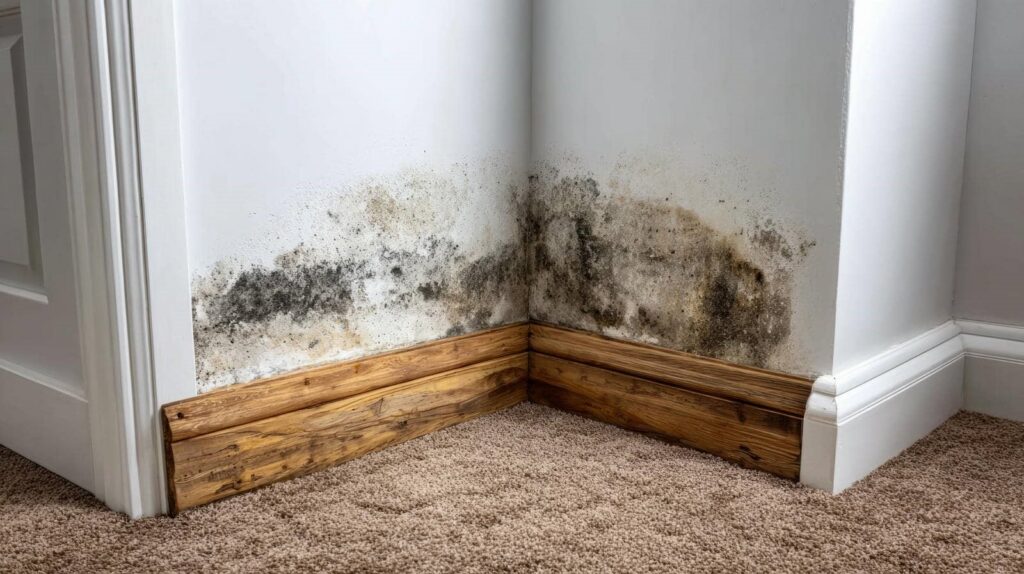
Visible Mold: Look for any discoloration or fuzzy patches on walls, ceilings, or floors.
Musty Odors: A persistent, damp smell often indicates hidden mold.
Water Leaks: Inspect areas prone to leaks or high humidity, as these are prime mold breeding grounds.
Condensation: Excess moisture on windows or walls can signal a mold-friendly environment.
Frequently Asked Questions
How Long Does It Take for Mold to Grow After Water Damage?
Mold growth can start within 24 to 48 hours after water damage. Understanding this mold growth timeline is essential, as it can greatly affect your environment and health if not addressed promptly.
Can I Use Bleach to Kill Mold Effectively?
While bleach can kill certain mold types, its effectiveness diminishes on porous surfaces. For best results, consider alternative solutions like vinegar or specialized mold removers, ensuring you tackle the problem thoroughly and safely.
What Are the Health Risks Associated With Mold Exposure?
Mold exposure can lead to various health risks, including mold symptoms like coughing, sneezing, and skin irritation. It can also exacerbate respiratory issues, particularly in individuals with asthma or weakened immune systems. Stay vigilant for signs.
Should I Hire a Professional for Mold Removal?
Absolutely, you should hire a professional for mold removal. Their expertise guarantees thorough treatment, preventing mold from turning your home into a toxic nightmare. Trusting professionals means safeguarding your health and restoring your space effectively.
How Can I Prevent Future Water Damage in My Home?
To prevent future water damage in your home, invest in waterproofing solutions and install efficient drainage systems. Regularly inspect these systems to guarantee they function properly, safeguarding your space from potential water intrusion and damage.
To sum Up
To effectively combat mold after water damage, you must act swiftly and decisively. While immediate action helps prevent mold’s insidious spread, neglecting to monitor and maintain your environment invites its return. By balancing proactive measures with consistent vigilance, you can safeguard your home and health. Remember, a clean, dry space fosters safety, while dampness and inattention create a breeding ground for mold. Stay diligent, and you’ll protect both your property and well-being from this persistent threat.
Recent Posts
3 Best Mold Prevention Drying Tips
When moisture lingers, mold can start growing in less than 48 hours, so your drying
Structural Drying for Flooded Property Restoration
When water invades a structure, both speed and strategy matter. Flooded property restoration starts by
What Is Structural Drying After Flooding
The majority of flood damage problems can worsen when moisture remains trapped in building materials,