
Contents
After flooding, addressing mold growth is vital to protect your health and property. You need to start by evaluating the extent of the mold removal and measuring humidity levels. Safety precautions are essential, so make sure you wear protective gear. Removing contaminated materials is the next step, followed by thorough drying and dehumidifying. Understanding these strategies will help you regain control over your environment and prevent future infestations. What steps should you take next?
Key Takeaways
- Thoroughly assess the extent of mold growth by inspecting for moisture, discoloration, and using a moisture meter for readings above 20%.
- Remove contaminated materials like drywall and carpeting, wearing protective gear, and disposing of them in sealed heavy-duty bags.
- Dry and dehumidify affected areas using fans, dehumidifiers, and proper ventilation to maintain humidity levels below 60%.
- Control future mold growth by improving ventilation, regularly inspecting for leaks, and utilizing moisture-absorbing materials in damp areas.
- Consider professional mold remediation for expert assessment, efficient removal, adherence to safety protocols, and long-term prevention strategies.
Assessing the Extent of Mold Growth
How can you effectively assess the extent of mold growth after flooding? Start by inspecting your space thoroughly, focusing on areas with visible moisture or water damage.
Use a flashlight to illuminate dark corners, checking for discoloration or fuzzy growth on walls, ceilings, and floors. Pay attention to hidden spots, such as behind furniture or inside cabinets.
Next, use a moisture meter to measure humidity levels in affected materials like drywall or wood. If readings exceed 20% moisture content, mold growth is likely.
You can also conduct an air quality test to identify airborne mold spores; this can provide a broader understanding of the contamination level.
Document your findings with photos and notes, noting the specific locations and extent of growth.
This thorough assessment will be essential for developing a targeted mold removal strategy, ensuring you address the problem effectively and restore your environment safely.
Ensuring Safety Precautions
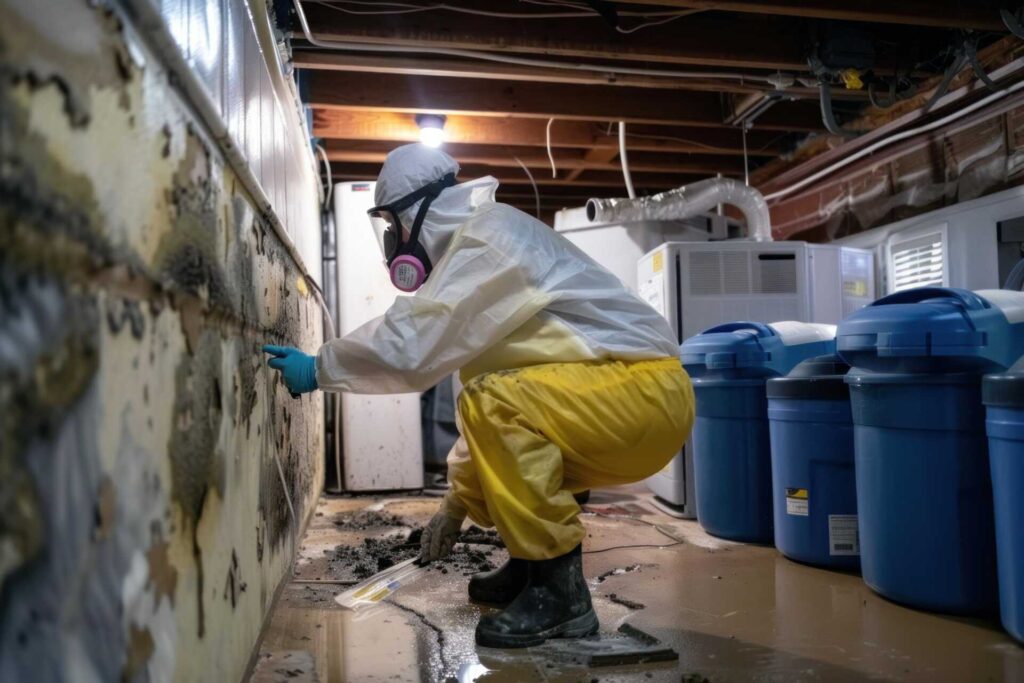
Before you start the mold removal process, it’s important to prioritize safety precautions to protect yourself from potential health hazards. Mold spores can trigger allergic reactions and respiratory issues, so taking the right steps is vital.
- Wear protective gear: Use gloves, goggles, and an N95 respirator to shield yourself from airborne spores.
- Ensure proper ventilation: Open windows and doors to maintain airflow, reducing the concentration of mold spores in the air.
- Control moisture: Keep the environment dry to prevent further mold growth during the removal process.
- Isolate the area: Seal off the affected space with plastic sheeting to contain spores and prevent cross-contamination.
- Have a first-aid kit handy: In case of any accidental exposure or allergic reactions, be prepared with important medical supplies.
Removing Contaminated Materials
As you begin the mold removal process, removing contaminated materials is essential to eliminate the source of mold growth and prevent future infestations.
Start by identifying materials that have been soaked or heavily impacted by floodwaters, such as drywall, insulation, carpeting, and furniture. If these items show signs of mold, it’s vital to dispose of them properly.
Wear protective gear, including gloves and masks, to avoid exposure. Use heavy-duty bags for disposal and seal them tightly.
For non-porous materials like metal or plastic, clean them thoroughly with a solution of water and detergent, followed by a disinfectant.
Taking these steps helps remove the immediate threat and contributes to a healthier living environment.
Drying and Dehumidifying Affected Areas
Once you’ve removed contaminated materials, it’s vital to dry and dehumidify the affected areas to prevent mold from returning.
Start by using fans to circulate air and expedite the drying process. Dehumidifiers are important; they reduce moisture levels in the air, creating an environment less conducive to mold growth.
Consider these strategies:
- Open windows and doors to increase ventilation.
- Use industrial-grade fans for faster air movement.
- Set up multiple dehumidifiers to cover larger areas.
- Monitor humidity levels regularly with hygrometers.
- Inspect hidden spaces like crawl spaces and attics for trapped moisture.
Cleaning and Disinfecting Surfaces
Once you’ve dried and dehumidified the affected areas, it’s essential to prepare surfaces for cleaning and disinfecting.
Start by removing any debris and loose materials, which helps ensure that disinfecting agents can penetrate effectively.
Next, you’ll need to choose appropriate disinfecting agents tailored to the surface type to eliminate mold spores and prevent future growth.
Surface Preparation Techniques
Preparing surfaces for mold removal after flooding demands thorough cleaning and disinfecting to ensure all spores are eliminated.
Start by following these essential steps:
- Remove all items from the affected area to access surfaces easily.
- Use a vacuum with a HEPA filter to capture loose spores and debris.
- Clean surfaces with soapy water to remove dirt and residue.
- Rinse thoroughly with clean water to ensure no cleaning agents remain.
- Allow surfaces to dry completely to prevent future mold growth.
Disinfecting Agents Overview
When tackling mold removal after flooding, selecting the right disinfecting agents is vital for effectively eliminating spores and preventing regrowth. Commonly used agents include hydrogen peroxide, which penetrates porous surfaces; quaternary ammonium compounds (quats), known for their broad-spectrum efficacy; and sodium hypochlorite, effective against a wide range of mold species.
It’s imperative to follow the manufacturer’s instructions for concentration and contact time to ensure maximum effectiveness.
Always wear appropriate personal protective equipment (PPE) when handling these chemicals to safeguard your health. Additionally, consider using environmentally friendly options that minimize toxic exposure while still achieving the desired results.
Using Mold Removal Products
As you navigate the aftermath of flooding, using effective mold removal products becomes essential to mitigate health risks and structural damage. Selecting the right products ensures thorough eradication of mold spores and prevents further growth.
Here are the key options to evaluate:
- Antimicrobial Sprays: Target mold and mildew directly, providing a protective barrier.
- Enzyme Cleaners: Break down organic materials that mold thrives on, ensuring deep cleaning.
- Bleach Solutions: Effective for non-porous surfaces, but use caution as it can produce harmful fumes.
- Vinegar: A natural alternative, it can kill many types of mold without harsh chemicals.
- Mold Removal Wipes: Convenient for quick clean-ups and maintaining mold-free surfaces.
Always follow product instructions for maximum efficacy and safety.
Preventing Future Mold Growth
To prevent future mold growth, you need to control humidity levels in your environment, ideally keeping them between 30% and 60%.
Improving your ventilation systems will help ensure that air circulates effectively, reducing moisture accumulation.
Additionally, regular inspections and maintenance of your property can identify potential issues before they escalate into mold problems.
Control Humidity Levels
Controlling humidity levels is vital for preventing future mold growth, especially after a flooding incident. High humidity creates a perfect breeding ground for mold spores, so it’s important to manage moisture effectively.
Here are some strategies you can implement:
- Use dehumidifiers to maintain indoor humidity below 60%.
- Regularly check and repair leaks in pipes and roofs.
- Make sure your home has adequate drainage systems to divert rainwater.
- Install moisture-absorbing materials, such as silica gel, in damp areas.
- Monitor humidity levels with a hygrometer to stay informed.
Improve Ventilation Systems
Improving ventilation systems is essential for preventing future mold growth, especially in areas prone to moisture accumulation. Proper airflow reduces humidity, making it harder for mold spores to thrive. Consider upgrading your HVAC system, installing exhaust fans in bathrooms and kitchens, and using dehumidifiers in high-moisture areas.
| Ventilation Solution | Benefits |
|---|---|
| HVAC System Upgrade | Enhanced air circulation |
| Exhaust Fans | Reduces humidity quickly |
| Dehumidifiers | Maintains ideal moisture levels |
| Attic Ventilation | Prevents heat buildup |
| Open Windows | Encourages fresh air flow |
Regular Inspections and Maintenance
Regular inspections and maintenance are essential for preventing future mold growth, especially in areas previously affected by flooding.
By proactively addressing potential issues, you can safeguard your home and ensure a healthy living environment.
- Check for water leaks in pipes and roofs
- Inspect basements and crawl spaces for dampness
- Clean gutters and downspouts to ensure proper drainage
- Monitor humidity levels with a hygrometer
- Replace air filters regularly to improve air quality
Monitoring and Maintenance Post-Remediation
Although the initial mold remediation may seem effective, ongoing monitoring and maintenance are crucial to ensure that mold does not return after flooding. Regular checks help you identify moisture issues and prevent mold resurgence. Implement a schedule for inspections, focusing on high-risk areas like basements and crawl spaces.
Here’s a simple table to guide your monitoring practices:
| Monitoring Activity | Frequency | Purpose |
|---|---|---|
| Visual Inspections | Monthly | Detect visible mold growth |
| Humidity Level Checks | Bi-weekly | Verify humidity stays below 60% |
| Air Quality Testing | Quarterly | Assess airborne mold spores |
Consulting Professional Mold Remediation Services
If your monitoring efforts reveal persistent moisture or mold issues, seeking help from professional mold remediation services can be a wise decision.
These experts utilize specialized techniques and equipment to ensure a thorough and safe removal process, minimizing health risks for you and your family.
Consider the following benefits of consulting professionals:
- Expert Assessment: They pinpoint the source of mold growth effectively.
- Advanced Equipment: Professionals use industrial-grade tools for efficient removal and drying.
- Health Protection: They adhere to safety protocols, reducing exposure to harmful spores.
- Comprehensive Solutions: Experts provide long-term prevention strategies, not just immediate fixes.
- Insurance Assistance: Many services can help you navigate insurance claims for damages.
Wrap-Up
Effectively removing mold after flooding requires thorough assessment and prompt action. To safeguard your space, make sure you follow safety precautions, remove contaminated materials, and dry the area completely. Regular monitoring and maintenance are essential to prevent future growth. If the situation feels overwhelming, don’t hesitate to consult professional mold remediation services to ensure a safe, healthy environment.
Recent Posts
Why Prevent Mold After Structural Drying?
After structural drying, you still need to prevent mold because hidden moisture can remain in
3 Best Mold Prevention Drying Tips
When moisture lingers, mold can start growing in less than 48 hours, so your drying
Structural Drying for Flooded Property Restoration
When water invades a structure, both speed and strategy matter. Flooded property restoration starts by