
Contents
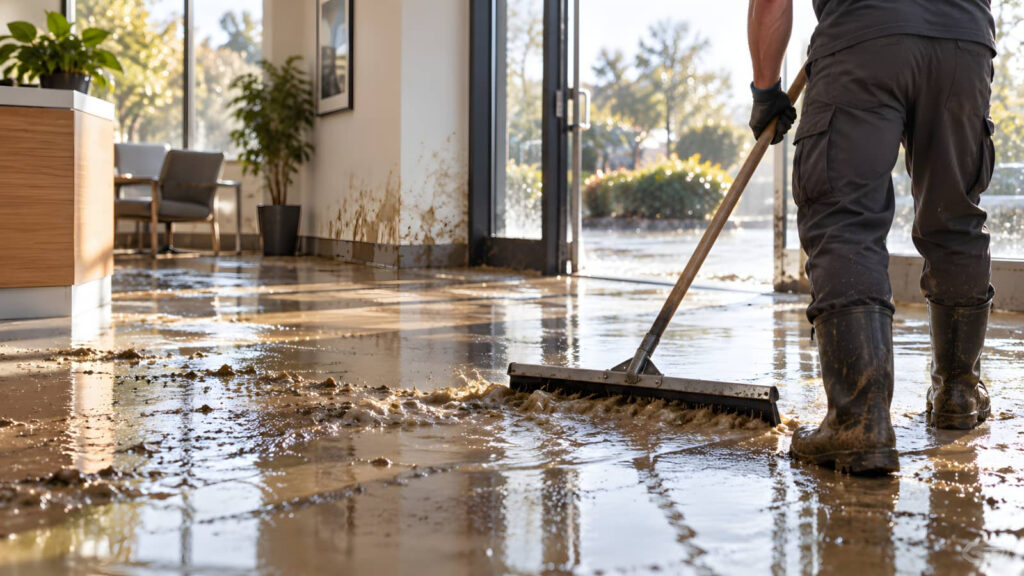
If you shut off the sewage source first, you can help limit secondary damage before it spreads. Commercial water extraction should then focus on protecting the area, because contaminated water can move quickly through flooring and wall cavities. Next, use the right equipment to remove standing water, then disinfect and dry the space thoroughly before moisture settles into building materials and creates a larger cleanup job.
Key Takeaways
- Shut off the water source immediately and isolate the affected area to stop further spread.
- Use the right pump for the water volume, solids, and lift height to speed extraction.
- Start at the lowest point and reposition pumps as levels drop for faster removal.
- Wear proper PPE and control access to keep the work zone safe and efficient.
- Disinfect, then dry the area quickly with air movers and dehumidifiers to prevent further damage.
Shut Off the Sewage Source and Protect the Area
Before you start extraction, shut off the sewage source at the main valve or fixture to stop additional contamination, then isolate the area so no one tracks waste through the building.
Next, post barriers, close adjacent doors, and label the work zone clearly. You’ll protect crew members and tenants while supporting sewage safety and area protection.
Remove nearby items that can’t be cleaned, and place salvageable contents in a dry, controlled space. Seal floor openings and low gaps with plastic or tape to limit spread.
Wear proper PPE before you touch contaminated surfaces, and keep tools dedicated to the zone. When you control access early, your team stays aligned, your site stays cleaner, and you reduce avoidable losses before restoration begins.
Pump Out the Sewage Water Fast
With the source controlled and the area secured, pump out the sewage water as quickly as possible using a submersible or trash pump rated for contaminated water. You’ll move faster when your pump selection matches the volume, solids load, and lift height.
Use drainage techniques that guide water to the pump intake, and keep discharge lines straight to limit backpressure.
- Place the pump at the lowest point first.
- Check hoses for secure, leak-free connections.
- Clear large debris that could clog the intake.
- Monitor flow and reposition the pump as levels drop.
Work as a coordinated crew, communicate changes fast, and keep the extraction path open. The quicker you remove standing sewage, the sooner your team can move to the next phase of recovery.
Disinfect and Dry the Area
Once the standing water is out, disinfect all affected surfaces with an EPA-registered antimicrobial cleaner and scrub away residual soil and biofilm. You should apply the product at the labeled dwell time, then rinse or wipe as directed so your team avoids chemical residue.
Focus on baseboards, wall cavities, flooring, and equipment feet, where contaminants hide. Use disinfection methods matched to the material: spray for hard surfaces, foam for vertical areas, and wipes for electronics.
Then start drying techniques immediately. Place air movers to create crossflow, run dehumidifiers, and keep doors open when safe. Monitor moisture with meters until readings stabilize.
Replace damp insulation and porous items that won’t dry quickly. When you act fast and stay consistent, you protect the space and support everyone working there.
Frequently Asked Questions
What Equipment Speeds up Commercial Water Extraction Most?
Truck-mounted extractors with high-flow pumps speed you up most; you’ll pair them with weighted wands, submersible pumps, and air movers. Use strong pumping techniques and extraction methods to pull water fast, drying crews stay together.
How Do You Estimate Water Damage Before Extraction Starts?
You estimate water damage by doing a water damage assessment, checking affected areas, and using moisture meter usage to map hidden saturation. You’ll document materials, compare readings, and prioritize extraction based on spread and depth.
When Should Structural Materials Be Removed During Extraction?
You should remove structural materials when moisture assessment shows saturation beyond drying limits or structural integrity is compromised. You’ll act fast, protect the team, and fit right in with a professional, coordinated restoration crew.
What Safety Gear Is Needed for Commercial Water Extraction?
You need personal protective gear: waterproof boots, gloves, goggles, respirator, and hard hat. In one warehouse job, these kept your team safe from contaminated splash. Follow safety protocols, and you’ll work confidently together.
How Can You Prevent Future Water Damage After Extraction?
You prevent future water damage by sealing leaks, improving drainage, installing alarms, and scheduling inspections. You’ll strengthen water damage prevention with long term solutions, and you’ll keep your facility protected and resilient together.
Recap
When sewage hits your commercial space, you need to act like a fire crew on a live wire. Shut off the source fast and cordon off the area to stop the mess from spreading. Then pump out the contaminated water with the right equipment, starting at the lowest point. Finally, disinfect, ventilate, and dry the site quickly with air movers and dehumidifiers. Keep checking moisture levels so hidden damage doesn’t sneak back in.
Recent Posts
Why Remediate Mold After Sewage Backup?
You need to clean, dry, and disinfect after a sewage backup, and you need to
Commercial Water Extraction for Backup Cleanup
When a sewer line overflows, you need to act fast to limit contamination and disruption.
Sewage Backup Cleanup for Flooded Basements
You might not realize that sewage water can continue releasing harmful gases long after the