
Contents
Within 24 to 48 hours after flooding, mold can begin to grow, and you may not see it until the damage is already spreading. If you leave moisture in place, you raise the risk of hidden contamination, structural decay, and poor indoor air quality. You need fast extraction, thorough drying, and targeted remediation to limit exposure and protect your home—but the first warning signs aren’t always where you expect them.
Key Takeaways
- Mold can start growing within 24 to 48 hours after flooding, so fast remediation prevents rapid spread.
- Proper cleanup removes contaminated materials and moisture, protecting indoor air quality and structural integrity.
- Moisture assessment with meters and infrared tools helps find hidden water behind walls and in framing.
- Mold exposure can trigger coughing, wheezing, irritation, and worsen asthma or allergies.
- Thorough documentation, drying, and prevention steps reduce future damage and support insurance claims.
Why Mold Remediation Matters After a Basement Flood
After a basement flood, mold can begin growing within 24 to 48 hours if moisture remains in porous materials like drywall, insulation, carpet, and wood.
You need mold remediation because spores spread fast, weaken indoor air quality, and can damage structural materials you rely on for a safe home.
Different mold types may appear, and each can behave differently, so you shouldn’t guess at cleanup.
With prompt assessment, you protect your household from avoidable exposure and help restore a healthy living space where everyone belongs.
Effective remediation techniques target contaminated surfaces, isolate affected areas, and remove colonized materials before growth advances.
When you act quickly and methodically, you reduce future repairs, limit hidden contamination, and keep your basement from becoming a lasting source of problems.
Why Water Extraction Comes First
You need to extract standing water first because every hour of delay increases material saturation and extends drying time.
Rapid moisture removal reduces the conditions that let mold spores colonize porous surfaces.
If you leave water in place, you’re allowing mold growth to begin before remediation can be effective.
Rapid Moisture Removal
Rapid moisture removal must begin immediately because standing water and saturated materials create the conditions mold needs to colonize.
You protect your structure by extracting bulk water first, then you stabilize surfaces with targeted moisture control. High-capacity pumps, wet vacuums, and commercial dehumidifiers work together to lower readings fast.
You’ll need drying techniques that match the material: carpet, drywall, framing, and subflooring each release water at different rates. If you delay, hidden pockets stay wet and crews lose time.
Acting now also helps your team work with confidence, because every hour you shorten limits damage. Precise extraction sets the foundation for the rest of remediation, and it keeps your response efficient, controlled, and professionally coordinated.
Preventing Mold Growth
Water extraction comes first because mold can start colonizing as soon as materials stay wet and oxygen remains available. You need to remove standing water fast, then verify hidden cavities, because moisture control sets the clock back on growth.
Follow these mold prevention tips to protect your home and your team:
- Shut off water sources immediately.
- Extract water from carpets, subfloors, and wall bases.
- Remove porous items that won’t dry quickly.
- Run dehumidifiers and air movers together.
- Monitor humidity until readings stay below 60%.
When you act decisively, you reduce spores, odors, and structural damage. You also create a safer recovery zone where everyone can work with confidence.
Precise drying isn’t optional; it’s the first control measure that keeps remediation effective.
How Fast Mold Starts After Water Damage
Mold can begin to develop within 24 to 48 hours after water damage if you don’t remove moisture quickly.
You need to treat damp materials, trapped humidity, and hidden wet areas as immediate risks because they accelerate the growth timeline.
Fast drying and prompt inspection help you limit contamination before it spreads.
Mold Growth Timeline
Even a brief flood can trigger mold growth within 24 to 48 hours if moisture remains in porous materials. You’re seeing the start of the mold lifecycle, and environmental factors control how quickly colonies establish.
Warm temperatures, stagnant air, and hidden dampness accelerate spore germination, while cooler, dry conditions slow it. In your space, watch for these key milestones:
- 0–24 hours: spores settle on wet surfaces
- 24–48 hours: germination can begin
- 2–7 days: visible colonies may form
- 1–2 weeks: odor and spread intensify
- Ongoing moisture: growth persists and expands
You belong in a response plan that treats every hour seriously. Act fast, document affected materials, and prioritize drying.
Mold doesn’t wait, so neither should you.
Early Moisture Risks
After flooding, moisture begins creating mold risk almost immediately, especially when it soaks into drywall, insulation, carpet, or wood framing.
You can’t assume visible drying means safety, because spores activate once materials stay damp for 24 to 48 hours.
In your home, trapped water raises humidity and feeds hidden colonies behind walls, under flooring, and inside HVAC cavities.
You need rapid moisture detection to find saturation before damage spreads.
You also need humidity control to keep indoor levels low enough to slow growth and protect air quality.
When you act fast, you join the group of homeowners who limit structural loss, reduce remediation costs, and keep their space healthier.
Delay gives mold the advantage; prompt response takes it back.
Flooded Basement Mold Signs to Spot
How can you tell if your flooded basement has mold growth? You can spot it by combining mold identification tips with disciplined basement humidity control.
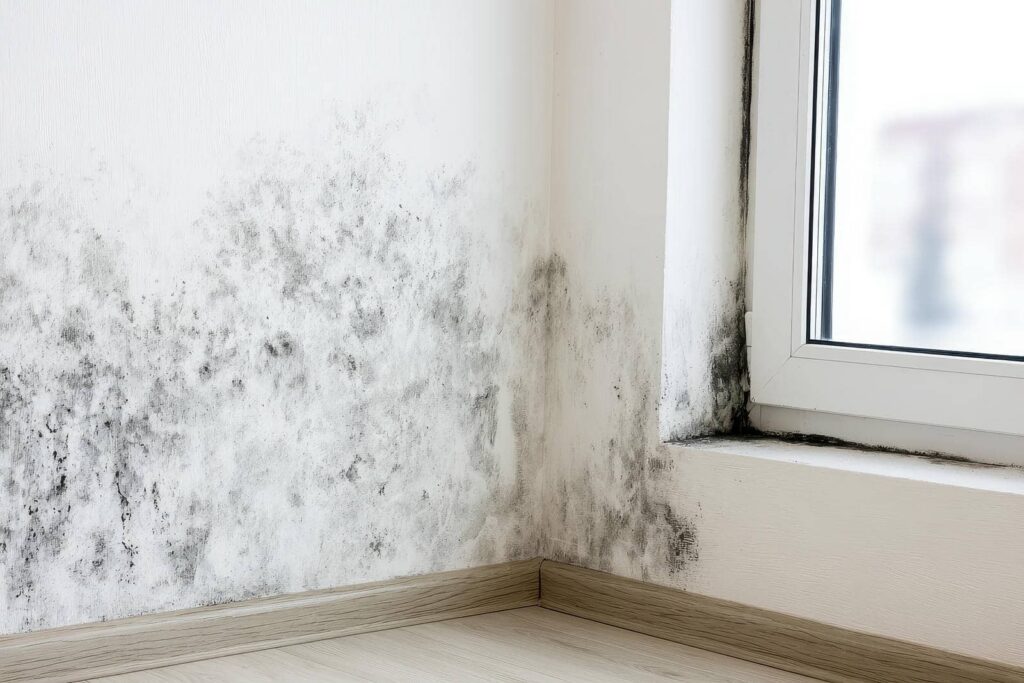
Check every surface after flooding; mold often appears within 24 to 48 hours. Look for these signs:
- Musty, earthy odor
- Dark or greenish patches on drywall
- White, gray, or black fuzzy growth
- Peeling paint or warped baseboards
- Condensation on pipes, walls, or windows
Inspect behind stored items, insulation, and carpet edges, where moisture lingers.
If materials stay damp, suspect hidden colonies and act fast. You’re not alone in this; careful observation helps you protect your space, document damage, and plan remediation with confidence.
What Mold Can Do to Your Health
Mold can affect your health by irritating the eyes, nose, throat, and lungs, especially when you inhale spores or mycotoxins during cleanup.
You may notice mold symptoms such as coughing, wheezing, congestion, skin irritation, or headaches. These health effects often worsen if you already have asthma, allergies, or another respiratory condition.
In sensitive people, exposure can trigger tightness in the chest, sinus inflammation, and persistent fatigue.
Even if you feel fine at first, repeated contact can strain your airways and lower your comfort at home.
You deserve a space that feels safe and supports recovery after flooding.
Treat visible growth and musty odors as warning signs, and take symptoms seriously so you can protect yourself and the people who live with you.
How Professional Mold Remediation Works
When flooding leaves mold behind, a professional remediation team starts with a detailed inspection to identify the extent of contamination, moisture sources, and affected materials.
You’ll see proven mold inspection techniques guide each decision, so your property gets targeted treatment, not guesswork. The team then contains the work area and uses remediation equipment to control airborne spores and remove contaminated material efficiently.
- Measure humidity and surface moisture
- Isolate impacted zones
- Filter air with HEPA units
- Remove porous, unsalvageable materials
- Clean, dry, and verify conditions
You stay informed through each phase, and you’re part of a process built to restore safe, stable indoor conditions.
After cleanup, technicians confirm drying and document that the area meets remediation standards.
What Basement Flood Cleanup Should Cover
A thorough basement flood cleanup should start with water extraction, moisture mapping, and a full inspection of walls, floors, insulation, and stored items so hidden damage doesn’t spread.
You need fast water removal, careful equipment usage, and strict safety precautions before you touch anything.
During the cleanup process, document flood damage with photos and notes for insurance claims, because clear records can reduce repair costs.
Next, perform a moisture assessment with meters and infrared tools to find trapped water behind finishes and within framing.
You should remove saturated materials that threaten structural integrity and check for health risks from contamination, sharp debris, and unstable surfaces.
When you work methodically, you protect your home and join a community of owners who handle loss with control and confidence.
How to Prevent Mold After Future Flooding
Preventing mold after future flooding starts with controlling moisture before it can settle into porous materials. You can protect your space by planning for rapid drying, improved drainage, and consistent humidity control.
Choose mold resistant materials where you rebuild, especially in basements, walls, and flooring, so your home stays resilient with your community.
- Install sump pumps and backflow valves.
- Seal foundation cracks and low entries.
- Use dehumidifiers after storms.
- Remove wet items within 24 hours.
- Inspect hidden cavities for trapped water.
You’ll also want regular HVAC maintenance and clear gutters so water moves away from your structure.
When you act early, you reduce contamination, protect indoor air quality, and keep your household safer after the next flood.
Frequently Asked Questions
How Long Should You Wait Before Entering a Flooded Basement?
You shouldn’t enter until local authorities confirm flood safety and the basement’s power’s off, structural risks are cleared, and water’s receded. You’ll reduce mold growth by waiting for full inspection and drying, not rushing in.
Can Bleach Fully Remove Mold From Basement Walls?
No, you can’t fully remove mold from basement walls with bleach. Bleach effectiveness is limited on porous surfaces; it may lighten visible mold growth, but you still need thorough cleaning, drying, and remediation.
Does Insurance Usually Cover Mold Remediation After Flooding?
Usually, you’ll get coverage only if your policy includes flood insurance. You should file insurance claims fast, document damage, and prioritize mold prevention, because standard policies often exclude flood-related mold remediation.
Can You Stay in the House During Mold Cleanup?
You can stay during mold cleanup only if containment protects you, ventilation stays controlled, and you follow safety precautions. Otherwise, leave; exposure can harm mold health. Your remediator should clear each area first.
What Should Be Tested for After a Basement Flood?
Test for mold types, sewage contamination, structural moisture, and electrical hazards; use testing methods, like air and surface sampling. An ounce of prevention’s worth a pound of cure—you’ll protect your home and community.
Final Thoughts
When your basement floods, you might think drying visible water is enough, but mold can begin within 24 to 48 hours. You need rapid water extraction, controlled containment, and thorough cleaning to stop spores from spreading and damaging materials. Professional remediation protects your air quality, limits structural decay, and reduces health risks. Act quickly, because every hour of lingering moisture gives mold more time to grow and makes restoration more difficult.
Recent Posts
What Is Water Damage Mold Cleanup?
When your building has a little moisture issue, water damage mold cleanup is the process
10 Best Flooded Mold Remediation Tips
Flooded Mold Remediation starts the moment floodwater enters your basement, because moisture can quickly turn
Basement Water Damage Cleanup Guide
A Basement Water Damage Cleanup project can feel like your whole house is under siege.