
Contents
When your building has a little moisture issue, water damage mold cleanup is the process you use to find, contain, and remove mold before it spreads further. You inspect affected materials, control humidity, dry the space, and discard contaminated items as needed. You also protect yourself with proper gear and tools. The exact steps depend on how far the growth has gone, and that’s where the details start to matter.
Key Takeaways
- Water damage mold cleanup removes mold caused by moisture and prevents further spread.
- It includes identifying affected areas, isolating them, and removing contaminated materials.
- Surfaces and hidden spaces are dried thoroughly, and humidity is controlled.
- Safety steps include shutting off power, wearing PPE, and using containment and HEPA filtration.
- Professional help is needed for large infestations, persistent odors, or damage in drywall and insulation.
What Water Damage Mold Cleanup Means
Water damage mold cleanup is the process of identifying, removing, and preventing mold growth after water intrusion has affected a building. You use it to restore safe indoor conditions and limit material damage.
You start with mold identification techniques to locate affected areas, then you isolate the space, remove contaminated materials, and dry all surfaces thoroughly.
Effective cleanup strategies include controlling humidity, filtering air, and disinfecting salvageable contents. You also verify that moisture sources are fixed, because mold can return if dampness remains.
This process helps you protect your property, support healthy occupancy, and feel confident your space belongs to everyone inside.
When handled correctly, cleanup reduces risk, improves air quality, and prepares the area for normal use again.
Signs of Mold After Water Damage
After water damage, you should check for visible mold growth on walls, ceilings, flooring, and hidden surfaces.
You may also notice a musty odor, which often signals active mold colonization even when growth isn’t obvious.
These signs indicate moisture remains and that you’ll need prompt cleanup to limit spread.
Visible Mold Growth
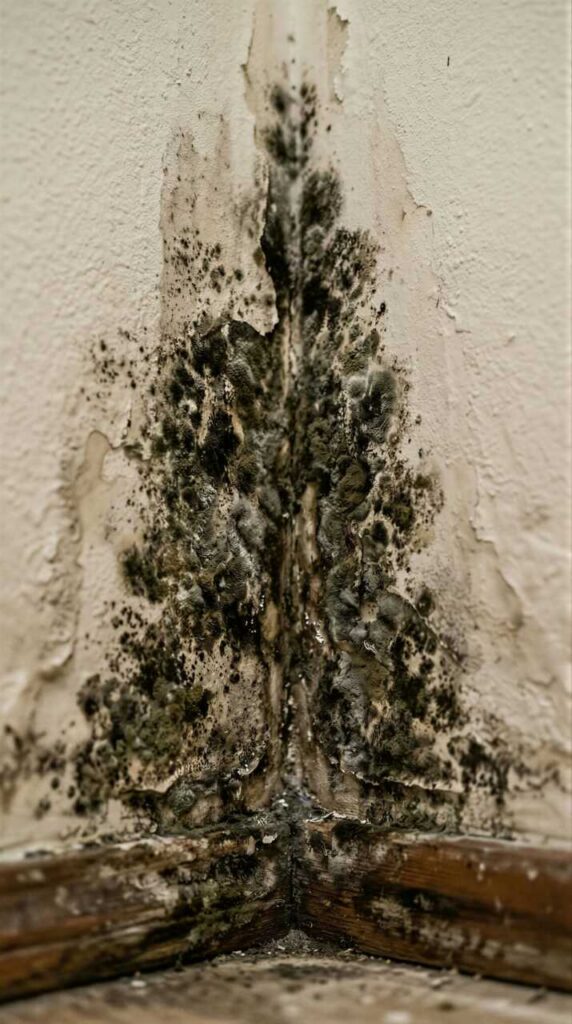
A telltale patch of green, black, white, or gray on walls, ceilings, baseboards, or insulation often signals visible mold growth after water damage.
You should treat any fuzzy, slimy, or powdery colony as active contamination, not cosmetic staining. Different mold types can spread at different rates, but all need moisture, organic material, and limited airflow to thrive.
Check behind furniture, under sinks, inside drywall cuts, and along window frames where growth conditions stay damp. If the area expands after drying, moisture remains in the building.
You can protect your space by isolating the affected zone, documenting the damage, and arranging professional cleanup. Quick action helps you stay safe, limit structural decay, and keep your home environment healthy for everyone inside.
Musty Odors
If your home still smells earthy, damp, or stale after drying, that musty odor often points to hidden mold growth behind walls, under flooring, or inside HVAC components.
You shouldn’t ignore musty smells, because they often indicate active moisture and microbial growth that your household can’t see yet.
Check common odor sources like soaked insulation, carpet padding, drywall cavities, crawl spaces, and air handlers.
If the smell gets stronger in closed rooms or after the system runs, the problem may be spreading through shared ductwork.
You’ll want to inspect quickly, dry affected materials, and remove contaminated porous items.
If odors persist, call a qualified remediation team so you can restore a safer, fresher living space for everyone in your home.
Why Mold Spreads Fast in Wet Buildings
When moisture lingers in a building, mold can spread fast because damp materials, poor airflow, and warm indoor temperatures create ideal growth conditions.
You’re dealing with a biology problem that starts quickly: porous drywall, wood, and insulation hold water, and that moisture retention supports mold growth within 24 to 48 hours.
Once spores land on wet surfaces, they absorb water, germinate, and form colonies that extend across hidden cavities and visible finishes.
Limited ventilation traps humidity, so the affected area stays active longer and contamination expands.
If you’re part of a cleanup team, you need to understand this rapid cycle so you can respond with confidence, coordinate fast, and protect your space before the problem spreads farther.
Safety Steps Before Cleanup Begins
Before you start cleanup, shut off electricity to affected areas, wear proper PPE, and confirm the space is safe to enter. You protect yourself and your team when you follow these preventive measures before any work begins.
Inspect for standing water, loose materials, and structural hazards.
Put on gloves, goggles, and a respirator that fits well.
Seal the area from other occupants to limit exposure.
Review health precautions, including symptom checks and hand washing.
You should document visible damage and note odors, stains, and soft materials.
Keep children, pets, and unprotected people out of the zone. If you suspect major contamination, stop and call a qualified professional.
These steps reduce risk and help your group move forward with confidence.
How Mold Cleanup Works
Mold cleanup starts with identifying all affected materials, then removing or cleaning them based on how porous they’re and how far the growth has spread.
You’ll assess hidden moisture, because mold can keep feeding on damp surfaces and restart the mold lifecycle. Nonporous items often respond to cleanup methods that scrub away colonies and residue, while porous materials may need disposal if contamination runs deep.
You should clean nearby surfaces too, since spores can settle outside the visible area. After removal, you’ll dry the space fully and verify that moisture is gone, which helps prevent regrowth.
This process works best when you stay methodical and communicate clearly with your team, so everyone knows what’s been cleaned, what’s been removed, and what still needs attention.
Equipment Used for Mold Cleanup
You’ll need protective cleanup gear, including gloves, respirators, goggles, and disposable coveralls, to limit exposure to mold spores and contaminated surfaces.
Moisture detection tools, such as hygrometers, infrared cameras, and pin-type meters, help you locate hidden dampness that can sustain growth.
Using both sets of equipment lets you control hazards and verify that affected materials are truly dry.
Protective Cleanup Gear
When handling mold cleanup after water damage, wear protective gear that limits inhalation, skin contact, and eye exposure. You protect yourself and support the team’s safe workflow with the right fit and coverage. Use these essentials:
Protective gloves: Choose chemical-resistant gloves that reach past the wrist and stay intact during scrubbing.
Safety masks: Wear N95 or better safety masks to reduce airborne spore inhalation.
Eye protection: Use sealed goggles to block splash and dust entry.
Disposable coveralls: Select hooded suits to keep spores off your clothes and skin.
Replace damaged gear right away, and never reuse contaminated items.
Good protection helps you work confidently, stay included in the cleanup process, and reduce unnecessary exposure.
Moisture Detection Tools
After protective gear is in place, use moisture detection tools to find hidden damp areas that can keep mold active. You’ll rely on moisture meters to measure wood, drywall, and subfloor readings, helping you spot materials that still hold water.
Infrared cameras reveal cooler surface zones that often signal trapped moisture behind walls, under floors, or above ceilings. Scan slowly, mark suspect areas, and compare readings across dry and wet sections.
When tools point to elevated moisture, you can target removal, drying, and containment more accurately. This step reduces guesswork, saves materials, and supports safer cleanup for your team and household.
What Happens During Drying and Removal
During drying and removal, technicians first stop the moisture source, then use air movers, dehumidifiers, and moisture meters to reduce humidity and verify that structural materials are drying at safe rates.
You’ll see targeted drying techniques that pull moisture from walls, floors, and framing without overexposing nearby surfaces. Removal methods focus on unsalvageable drywall, insulation, or carpet, so you’re left with clean, stable materials.
- Contain the work area.
- Remove damaged porous items.
- Dry remaining structural surfaces.
- Check moisture readings until they’re within target range.
This process helps you stay informed and involved, while technicians work efficiently and keep the site organized.
You get clear progress, precise measurement, and a cleaner path toward safe restoration.
How to Prevent Mold After Water Damage
To prevent mold after water damage, you need to dry materials quickly, remove contaminated porous items, and control indoor humidity before spores can grow.
You should open windows only when outdoor air is dry, run dehumidifiers, and keep fans moving air across wet surfaces.
Check hidden spaces like wall cavities, baseboards, and under flooring, because trapped moisture can persist.
Clean hard surfaces with detergent, then dry them fully. Use moisture meters or touch checks to confirm materials are no longer damp.
Your mold prevention strategies should also include fixing leaks, sealing entry points, and improving drainage.
For lasting water damage prevention, inspect plumbing, roofs, and appliances routinely.
When you act fast and stay consistent, you protect your space, reduce risk, and keep your home healthier for everyone.
When to Call a Mold Remediation Pro
You can handle minor surface moisture and small, isolated spots yourself, but call a mold remediation pro when water damage is widespread, hidden, or has been present for more than 24 to 48 hours.
You’ll protect your home crew and avoid deeper structural loss.
Visible growth covers more than 10 square feet.
Odors persist after drying and cleaning.
Drywall, insulation, or subfloors stay damp.
Anyone has asthma, allergies, or other mold health concerns.
Pros use moisture meters, containment, HEPA filtration, and source removal to stop spread.
They also assess remediation costs before work starts, so you can plan.
If you’re unsure, trust the signs and act fast; the right team helps you restore a healthier space.
Frequently Asked Questions
How Long Does Water Damage Mold Cleanup Usually Take?
Usually, you’ll spend 1 to 7 days on mold damage cleanup, depending on moisture, mold growth, and material removal. You’ll move through the cleanup process faster when drying starts quickly and contamination stays localized.
Can I Stay Home During Mold Cleanup?
You can stay home, ironically, only if you follow safety precautions and your mold health risk stays low. If technicians seal the area well, you’ll likely remain elsewhere, especially when containment, ventilation, and filtration aren’t perfect.
Will My Insurance Cover Mold Cleanup Costs?
Your mold cleanup costs may be covered if your policy includes mold insurance, but you’ll need to check coverage limits, exclusions, and the cause of damage. You should file quickly and document everything carefully.
Does Mold Always Return After Cleanup?
No, mold doesn’t always return after cleanup. You can stop it by controlling mold growth factors and using mold prevention strategies. Think of moisture as a seedbed; you’ll keep your home’s ecosystem healthy and stable.
What Items Usually Need Replacement After Mold Cleanup?
You’ll usually replace porous items like drywall, insulation, carpet, ceiling tiles, and upholstered furniture after a mold assessment. Contaminated replacement materials should meet code, resist moisture, and restore your space safely and confidently.
Recap
Water damage mold cleanup is your building’s reset button after moisture opens the door to hidden growth. You identify the source, remove contaminated materials, dry every surface, and control humidity before mold can take root again. Think of it as sealing a cracked dam before the flood spreads. If you see widespread growth, lingering odors, or recurring dampness, you shouldn’t wait—call a remediation professional to protect your structure and health.
Recent Posts
3 Best Mold Prevention Drying Tips
When moisture lingers, mold can start growing in less than 48 hours, so your drying
Structural Drying for Flooded Property Restoration
When water invades a structure, both speed and strategy matter. Flooded property restoration starts by
What Is Structural Drying After Flooding
The majority of flood damage problems can worsen when moisture remains trapped in building materials,