
Contents
If you let mold after flooding go unchecked, it can spread like a hidden system failure throughout your building. Remediate Mold by removing moisture quickly, because mold can grow on damp materials and compromise air quality, occupant health, and structural integrity. In commercial spaces, that means more than cleanup costs. It can disrupt operations, damage finishes, and create liability issues, but the real risk often starts before you notice it.
Key Takeaways
- Flooding creates ideal moisture conditions for mold to grow quickly on drywall, wood, carpet, and other porous materials.
- Remediation removes mold before spores spread further and worsen indoor air quality.
- Mold exposure can trigger coughing, congestion, throat irritation, and asthma or allergy flare-ups.
- Fast cleanup reduces structural damage, warping, and costly repairs to building materials.
- Remediation helps restore safe, usable spaces and prevents business interruptions after flooding.
Why Mold Grows After Flooding
After flooding, mold grows quickly because water-soaked materials create the moisture, warmth, and organic food source mold needs to germinate and spread.
In flood conditions, you expose drywall, carpet, wood, and dust to sustained dampness, and that lets spores activate.
During the mold lifecycle, spores land on a surface, absorb water, form hyphae, and build colonies that release more spores.
You can’t see every early change, but the biology progresses rapidly when humidity stays high and materials remain wet.
If you’re part of a recovery team, you’ll recognize that intact structures often hide moisture inside cavities, which supports continued growth.
Your shared goal is to limit these conditions before colonies expand and contaminate adjacent areas.
Why Quick Water Extraction Prevents Mold
Quick water extraction reduces mold risk because it removes the standing moisture mold needs to germinate and colonize. When you act fast, you lower surface wetness, reduce capillary absorption in materials, and limit microbial amplification.
Effective water extraction should begin with pumping, vacuuming, or squeegeeing, followed by targeted drying of carpets, subfloors, wall cavities, and contents. You help mold prevention by controlling humidity, maintaining airflow, and verifying that materials reach safe moisture levels.
In a coordinated response, your team can isolate affected zones, document conditions, and avoid unnecessary delays that let spores establish. Fast extraction doesn’t eliminate every hazard, but it sharply shortens the time wet materials stay vulnerable.
When you respond promptly, you protect your space and support your community’s recovery.
Health Risks of Mold in Commercial Buildings
When mold persists in commercial buildings, you can expose occupants to respiratory irritation from airborne spores and microbial fragments.
You’ll also increase the risk of allergy and asthma symptoms, especially in sensitive individuals.
Because staff and visitors may have different exposure durations and health profiles, you need to assess occupant exposure carefully.
Respiratory Irritation Risks
Mold exposure in commercial buildings can irritate the respiratory system, especially in occupants with asthma, allergies, or other airway sensitivities. You may notice respiratory symptoms such as coughing, throat irritation, nasal congestion, or shortness of breath after mold exposure.
These effects often result from inhaled spores, fragments, and microbial compounds that inflame airway tissue. In shared workspaces, you and your team can experience reduced comfort and lower concentration when indoor air quality declines.
Moisture-damaged materials can release airborne contaminants continuously if remediation doesn’t occur. Prompt removal of contaminated building materials, source drying, and filtration help reduce exposure pathways.
When you address mold quickly, you protect the breathing environment your occupants rely on and support a healthier, more stable workplace for everyone.
Allergy And Asthma Triggers
Because mold can act as a persistent indoor allergen, it may trigger nasal, ocular, and skin reactions, as well as asthma flares, in sensitive occupants.
When you manage commercial space, you reduce mold allergies by limiting dampness and correcting water intrusion quickly.
Mold spores and fragments can activate your immune response, increasing allergic reactions and other health symptoms.
In people with asthma, these particles can serve as asthma triggers and worsen respiratory effects, including coughing, wheezing, and chest tightness.
Effective mold prevention supports stable indoor air quality and helps you maintain a healthier environment for everyone.
You also protect your team by removing contaminated materials, controlling humidity, and verifying that remediation has eliminated visible growth and moisture sources.
Occupant Exposure Concerns
Occupants in water-damaged commercial buildings can inhale mold spores, fragments, and microbial byproducts that may irritate the eyes, nose, throat, and skin.
You should treat this as an occupant health issue, not just a property defect, because repeated exposure can worsen respiratory symptoms, trigger headaches, and reduce comfort and productivity.
If moisture remains in carpets, wall cavities, or HVAC components, you may also face hidden contamination that spreads through occupied zones.
Prompt drying, removal of damaged materials, and verified remediation lower risk and support a healthier shared workspace.
When you build mold awareness into your response plan, you help protect people, maintain trust, and create an environment where everyone can feel safe, included, and able to focus.
How Mold Damages Building Materials
When floodwater leaves materials wet, you weaken wood, drywall, insulation, and adhesives, reducing their structural performance.
Mold then breaks down surface coatings and porous substrates by metabolizing organic content and degrading bonds.
Because hidden moisture often persists behind finishes, damage can spread quickly before you detect it.
Moisture Weakens Materials
Moisture enters porous building materials and reduces their structural integrity, making drywall, wood, insulation, and adhesives easier to deform, crack, or separate.
You’ll see material deterioration accelerate as fibers swell, fasteners loosen, and bonded layers lose load transfer. In your home, prolonged wetting can lower dimensional stability, so framing members may warp and panels may sag under normal service conditions.
Wet insulation also compresses, which cuts thermal performance and leaves hidden cavities where moisture can linger. When you act quickly, you help your space recover as a safer, more durable environment for everyone there.
Drying and removal limit continued weakening, because repeated saturation cycles compound damage and preserve conditions that undermine structural integrity.
Mold Breaks Down Surfaces
Mold gradually breaks down building surfaces by feeding on organic components and by releasing enzymes and acids that degrade materials.
When you leave contaminated drywall, wood, or insulation in place, you invite surface degradation that can shorten service life and reduce structural integrity. You may notice softening, staining, warping, and loss of cohesion as the material’s binder chemistry changes.
Porous finishes give mold more area to colonize, so your walls and framing can lose protective performance faster than you’d expect.
In shared spaces, that deterioration affects the whole building system, not just one room.
Hidden Damage Spreads Fast
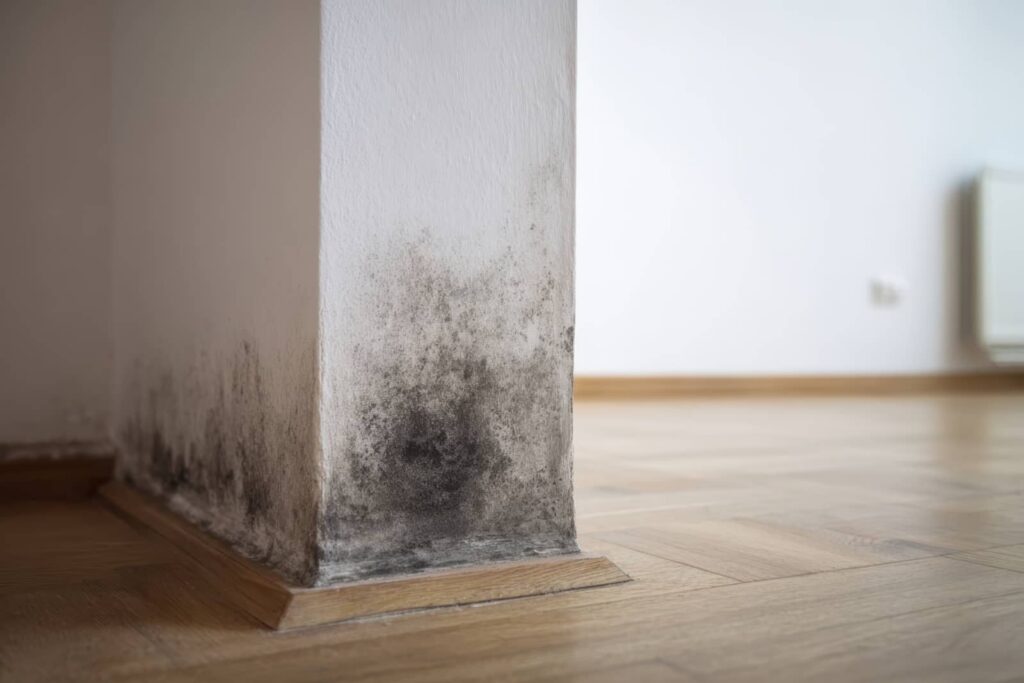
Even after you remove visible growth, hidden contamination can keep spreading through wall cavities, subfloors, and insulation.
You’ll often find hidden sources inside porous materials where moisture stays trapped, and that supports rapid spread. Mold enzymes digest drywall paper, wood fibers, and adhesives, weakening structural integrity and creating more exposed surfaces.
As damage progresses, spores and fragments move through air gaps, HVAC returns, and cracks, so the problem can extend beyond the original wet area. You’re not just cleaning a surface; you’re stopping a material failure process.
- Inspect concealed voids with moisture meters and cameras.
- Remove unsalvageable porous materials promptly.
- Dry, clean, and verify all affected assemblies.
When you act early, you protect your space and help everyone in it stay safer.
Signs Your Property Needs Mold Remediation
How do you know when cleanup has gone beyond surface drying and requires professional mold remediation? You can’t rely on appearance alone.
If you notice musty odors, recurring staining, warped drywall, peeling paint, or soft flooring, you likely need a deeper assessment. Visible growth on walls, ceilings, or HVAC components is another clear signal.
Use mold detection methods such as moisture meters, infrared checks, and air sampling to confirm hidden contamination.
Follow practical property inspection tips: examine basements, attics, behind cabinets, and around windows after any flood event.
If occupants report coughing, eye irritation, or headaches indoors, treat that as a warning.
When materials stay damp or odors persist after ventilation, your property probably needs targeted remediation by trained professionals who can restore a safe environment.
Why Fast Mold Remediation Saves Money
Fast action after flood exposure limits the extent of mold growth and reduces total repair costs.
You protect your property when you address moisture immediately, because delay lets colonies spread into porous materials and increases demolition, labor, and replacement expenses.
Quick response also preserves finishes and reduces downtime, so you stay part of a prepared community that values prevention.
- You cut remediation scope and achieve direct cost savings.
- You lower secondary damage to framing, drywall, and contents.
- You gain long term benefits through fewer recurring moisture problems.
How Commercial Mold Remediation Works
Commercial mold remediation starts with a site assessment to identify affected materials, moisture sources, and the extent of contamination.
You then use mold assessment techniques, including visual inspection, moisture mapping, and air or surface sampling, to define the work area and confirm the contamination profile.
Next, your team contains the zone with barriers and negative air pressure, so spores don’t spread to clean spaces.
Technicians remove unsalvageable porous materials, clean reusable surfaces, and apply remediation equipment such as HEPA vacuums, air scrubbers, and dehumidifiers.
After that, they dry the structure to target moisture levels and verify conditions with follow-up testing.
This process helps you work with a coordinated crew, maintain control, and return the space to a safe, functional state.
How Mold Affects Business Operations
When mold takes hold in a business facility, it can disrupt operations by forcing you to isolate work areas, suspend use of affected rooms, and delay normal workflows. This interruption threatens business continuity and reduces operational efficiency. You may see employee productivity drop as staff relocate, reassign tasks, or avoid contaminated zones.
- Lost labor time and cleanup increase financial impact.
- Deferred facility maintenance can worsen structural conditions.
- Delays in service can weaken customer trust and brand reputation.
You also face insurance implications if claims documentation is incomplete or response times lag. In technical terms, mold exposure adds uncertainty to scheduling, resource allocation, and compliance.
Preventing Mold After Future Flooding
To reduce the risk of recurring mold after future flooding, you need a prevention plan that starts before water enters the building. You should integrate mold prevention strategies into your flood preparedness program, including sealed wall assemblies, elevated utilities, backflow valves, and documented shutoff procedures.
You’ll protect your team when you inspect roofs, drains, and foundation joints routinely, then correct leaks immediately. Keep dehumidifiers, pumps, and drying fans ready, and assign roles so everyone knows who responds first.
After any flood, remove wet materials within 24 to 48 hours, verify moisture with meters, and disinfect surfaces that can support growth. Train staff to report damp odors, staining, or condensation so you can act fast and maintain a healthy, connected workplace.
Frequently Asked Questions
How Long Does Mold Remediation Usually Take?
You’ll usually spend 1–5 days on the remediation process, but severe mold growth can take 1–2 weeks. You’ll need drying, containment, removal, cleaning, and verification, and your team’s scope determines the timeline.
Does Insurance Cover Commercial Mold Remediation?
You’ll usually get commercial coverage only if your mold policies include it; many exclude flood-related fungus. Review limits, exclusions, deductibles, and reporting deadlines carefully, then file promptly to maximize your reimbursement.
Can Employees Stay in the Building During Remediation?
You shouldn’t stay in the building during remediation unless you’ve isolated work zones; otherwise, your office becomes a petri dish. Prioritize employee safety, follow remediation procedures, and keep teams informed so everyone feels protected.
What Certifications Should a Mold Remediation Company Have?
You should look for mold remediation certifications like IICRC, state licensing, and respirator training. When choosing qualified professionals, verify insurance, EPA-aligned practices, and documented safety protocols so you’ll trust their work and fit in confidently.
Is Mold Testing Needed Before Remediation Begins?
No, you don’t always need mold testing before remediation begins; a flooded basement with visible growth can be addressed immediately. Testing may still help you define contamination limits, document conditions, and reduce health risks.
Final Thoughts
You should remediate mold after flooding because moisture gives it a fast track to spread, and every hour of delay increases health risks and structural damage. By extracting water quickly and removing contaminated materials, you protect occupants, reduce repair costs, and keep your operations from grinding to a halt. Think of it as cutting off a fire before it becomes a blaze. Fast action helps you restore a safe, resilient property.
Recent Posts
Why Sewage Backs Up in Basements
You’d think a basement should stay dry, but one sewer backup can turn it into
How to Prevent Mold After Drying
You might not realize that mold can start growing in hidden cavities before visible surfaces
Why Prevent Mold After Structural Drying?
After structural drying, you still need to prevent mold because hidden moisture can remain in